


What is hunter jumper riding? It is the name of the largest English riding discipline in the United States and also a small trap, because it is not one thing. It is two rings with opposite rules (hunters and jumpers) plus a third (equitation) that borrows the clothes of one and the courses of both. This guide explains what each ring is, how each is actually scored, using the 2026 US Equestrian Rulebook rather than a summary of it, how the divisions and fence heights work, where the sport came from, and how a new rider gets into it.
The short answer
Hunters are judged on the horse: its jumping style, movement, pace and manners over a course of natural-looking fences, scored subjectively by a judge. Jumpers are scored on the clock and the rails: knock a rail, 4 faults; refuse, 4 faults; go over the time allowed, 1 fault a second; fewest faults and fastest time wins, no opinion involved. Equitation is judged on the rider: position, effectiveness and control, over hunter-style or jumper-style courses. A “hunter jumper barn” teaches all three, and most riders do all three at some point.
The figure-skating and speed-skating comparison is the usual shorthand and it is fair: same ice, same skates, one judged on how it looks and one on how fast it goes.
Where hunter jumper riding comes from
The hunter ring is a stylised version of the fox hunting field. The US Hunter Jumper Association’s own introduction puts it plainly: “Show ring Hunters trace their origins to the sport of foxhunting, where horse and rider navigated miles of varied countryside.” The qualities a field hunter needed, a steady pace, a safe and efficient jump, and manners in company, became the qualities the show ring rewards. The fences are still called by their field names: coops, gates, brush, post and rail, stone walls.
Show jumping came from the same fields but took the other fork, toward the measurable: how high, how wide, how fast. The two rings have run side by side at American shows for over a century, and in 2004 they got a shared governing body when the USEF Board recognised the newly formed USHJA as the national affiliate for both disciplines. USHJA now represents about 43,000 members, and US Equestrian, which writes the rulebook, licenses more than 2,400 competitions a year across all breeds and disciplines, with hunter jumper the largest share.
Hunters: the horse is judged
What the rule says. Hunter classes “must be judged on performance and soundness and when indicated, conformation, suitability or manners” (2026 USEF Rulebook, HU132). Performance is defined in HU136 as “an even hunting pace, manners, jumping style together with faults and way of moving over the course.”
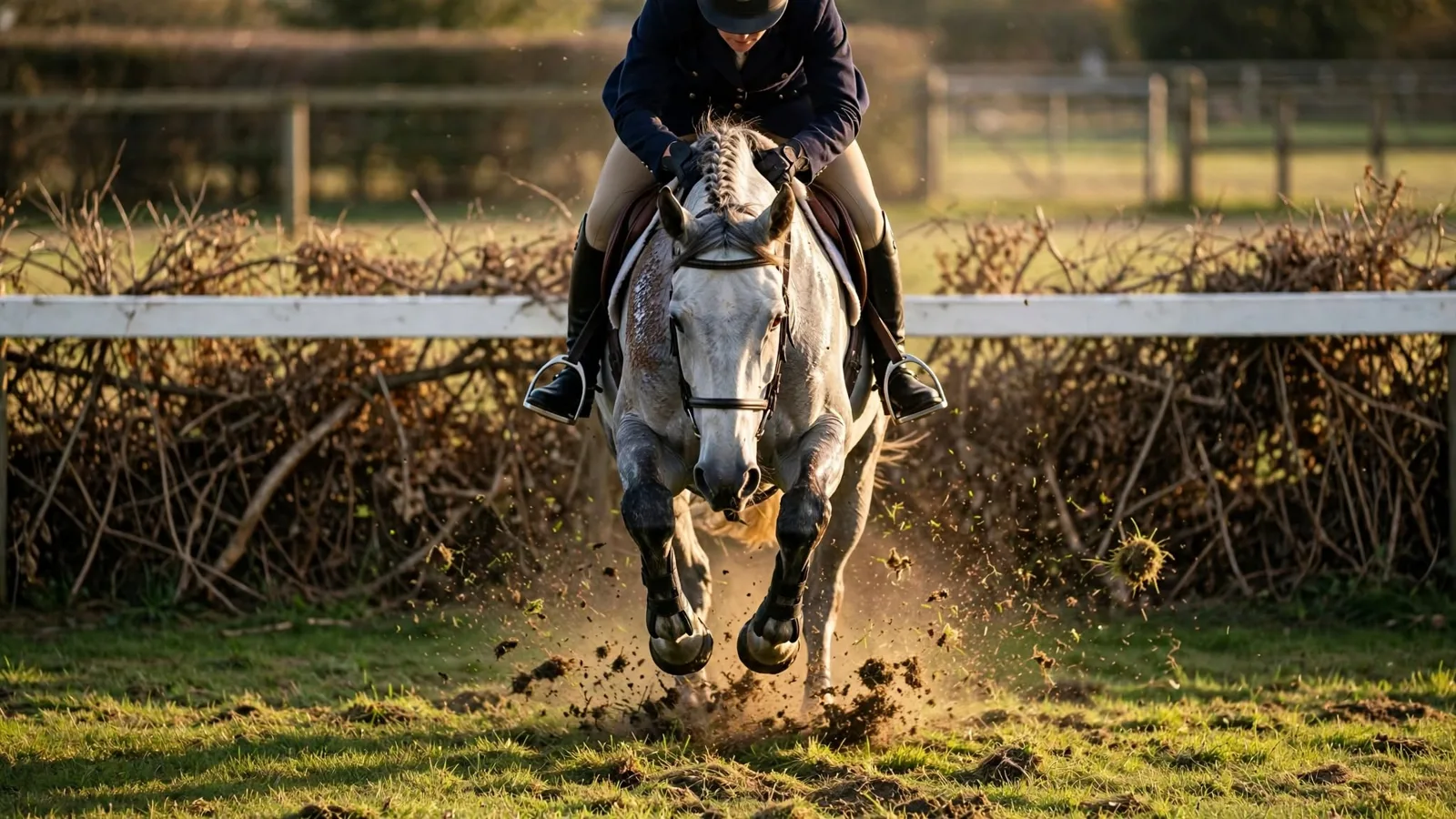
What the judge is looking for. A horse that meets each fence out of the same rhythmic canter, jumps in good form (knees up and even, a round arc over the fence), lands and continues without changing pace, and looks as though it would be a pleasure to ride across country. Courses are eight to twelve fences of natural materials set on related distances, conventionally a 12-foot stride, so the horse that keeps an even pace meets every fence correctly.
How it is scored. Judges score each round, conventionally out of 100, and the rulebook lists what costs points. HU137 splits faults into three groups:
- Minor or major, at the judge’s discretion: rubbing the jump, swapping leads, late lead changes, spooking, kicking out, jumping out of form, jumping off the centre of the fence, bucking or playing, adding or leaving out a stride in a line.
- Major: knockdown, refusal, crossing your track, dangerous jumping, “addressing a jump” (stopping to show the horse the fence), completely missing a lead change, adding or eliminating a stride in an in-and-out, breaking to trot on course.
- Elimination: three refusals, off course, fall of horse or rider, bolting from the ring, stopping for a lost shoe or broken tack.
Notice what is on that list: adding a stride. In the hunter ring a horse that fits five strides where the course designer set four has made a fault, because the even hunting pace is the whole point. That single rule explains most of what a hunter judge sees that a spectator does not.
Conformation classes add the horse’s build to the score: “All Conformation sections are to be judged 70% on performance, 30% on conformation” (HU115), and the horse is stripped of its saddle and stood up for the judge.
Under saddle classes (the “hack”) are the flat class in each hunter section, judged on movement and manners at walk, trot and canter with all the horses in the ring together.
Jumpers: the clock and the rails
What the rule says. Jumper classes are scored on faults and time under a table that leaves nothing to opinion. From JP144, the Table of Jumping Faults in the 2026 Jumper chapter:
| What happened | Penalty |
|---|---|
| Knockdown of an obstacle “with any portion of horse, rider or equipment” | 4 faults |
| First disobedience (refusal or run-out) anywhere on course | 4 faults |
| Second cumulative disobedience | Elimination |
| Exceeding the time allowed, “for each commenced second” | 1 fault |
| Fall of horse and/or rider | Elimination |
| Off course | Elimination |
| Taking more than 45 seconds to jump the next obstacle | Elimination |
The time allowed is set from the measured course length at a minimum speed of 350 metres per minute (JP131). A horse that goes clear inside the time has a clear round; if several do, the class is decided by a jump-off over a shortened course against the clock, or by time in the first round, depending on the table used.
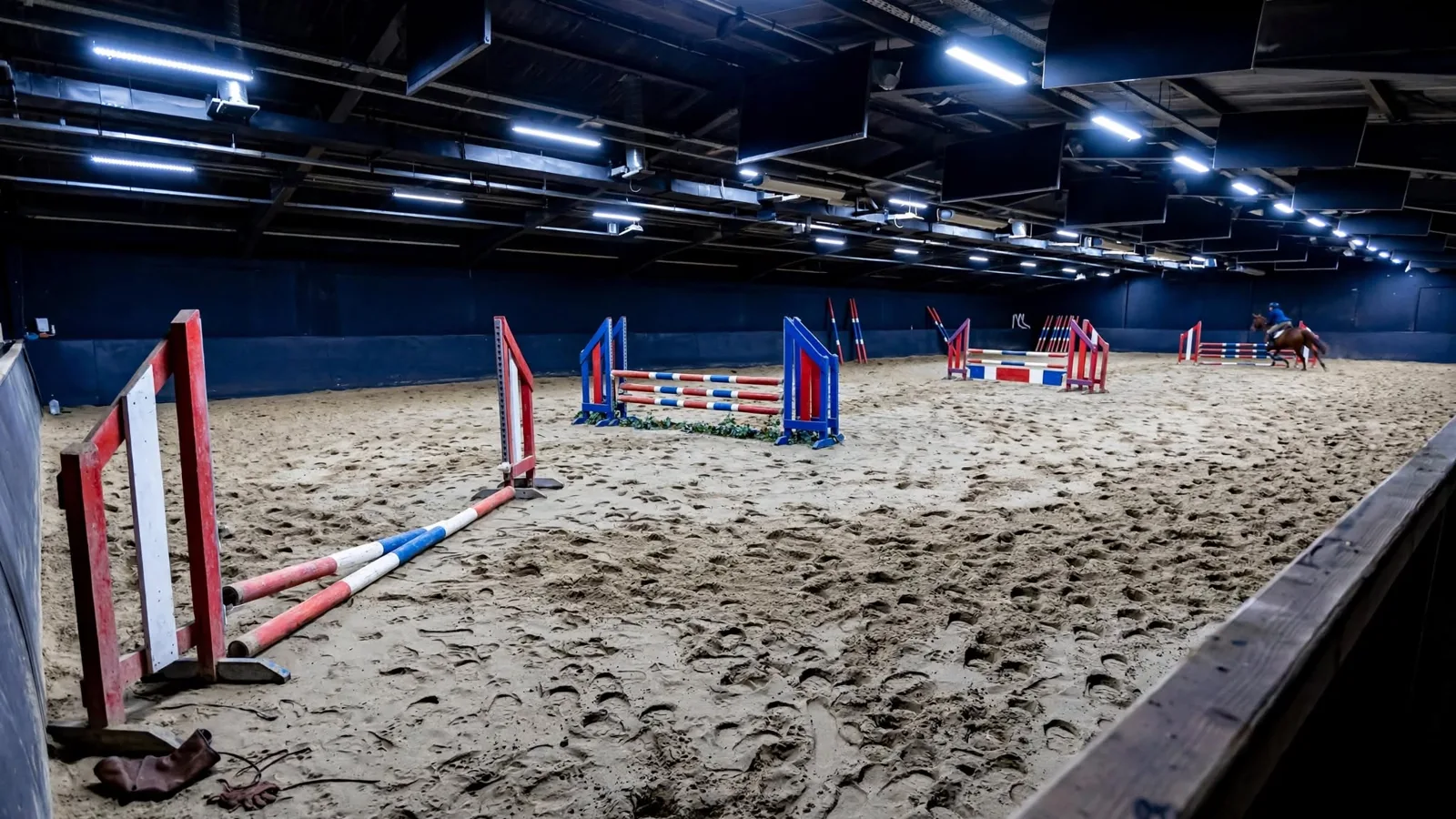
What the rider is doing. Walking the course beforehand to plan the track and the striding, then riding for a clear round first and speed second. Jumper courses are twelve to sixteen fences, brightly coloured, with combinations (two or three fences a stride or two apart), tight turns and related distances that reward accuracy. Rails sit in shallow cups so that a rub becomes a knockdown; the hunter ring requires cups “at least 1 1/2 inches deep” so that “a slight rub will not cause a knockdown” (HU123).
The horse. Careful, scopey and quick off the ground. Style over the fence is irrelevant unless it costs a rail. A jumper that swaps leads, bucks on landing or jumps crooked has committed no fault at all.
Equitation: the rider is judged
What the rule says. Equitation is judged on the rider, and the rulebook describes the rider it wants. EQ105 of the 2026 Equitation chapter: “Rider should have a workmanlike appearance, seat and hands light and supple, conveying the impression of complete control should any emergency arise.” Hands “over and in front of horse’s withers, knuckles thirty degrees inside the vertical,” making “a straight line from horse’s mouth to rider’s elbow.” Position: “eyes should be up and shoulders back,” “ankles flexed in, heels down, calf of leg in contact with horse and slightly behind girth.”
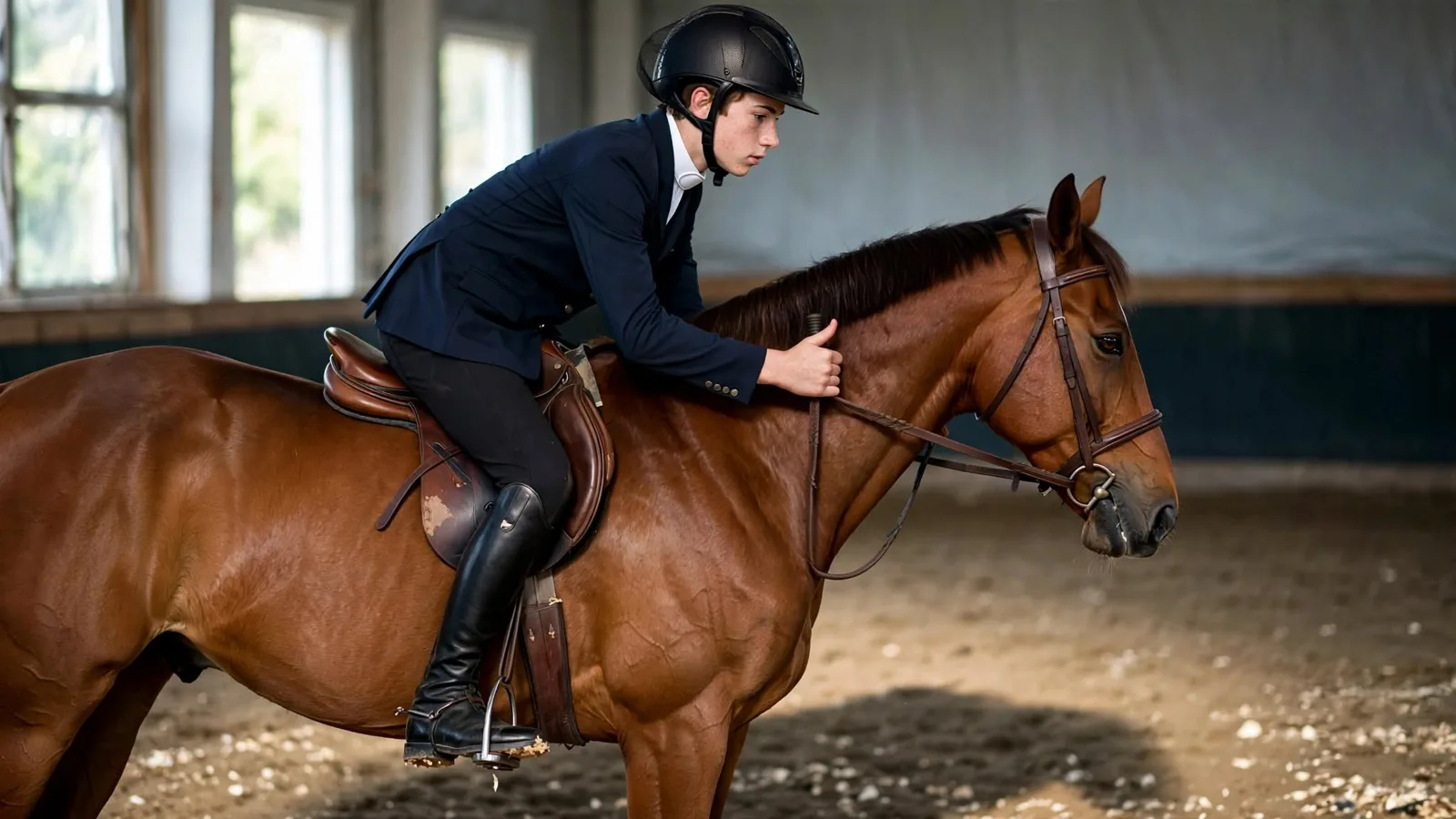
How it is scored. Subjectively, on position, effectiveness and the quality of the round the rider produces. The horse’s jumping style is not scored, but a horse that knocks a rail or chips a distance reflects on the rider who let it happen. Judges may call riders back for tests: riding without stirrups, counter-canter, halting, trotting a fence, switching horses.
Why it matters. Equitation is the training ground for both other rings. The three national finals held every fall (the USEF Medal Final, the WIHS Equitation Finals and the ASPCA Maclay) are equitation classes, and our guide to hunter jumper attire explains why the turnout for those finals is the most conservative in the sport. The rider is the picture.
How the three rings compare
| Hunters | Jumpers | Equitation | |
|---|---|---|---|
| Who is judged | The horse | Nobody: faults and time | The rider |
| Scoring | Subjective, judge’s score out of 100 | Objective, JP144 fault table | Subjective, on position and effectiveness |
| Course | 8 to 12 natural fences, related distances, 12-foot stride | 12 to 16 coloured fences, combinations, tight turns | Either style; tests may be added |
| A rail down | Major fault | 4 faults | Counts against the rider |
| Adding a stride | A fault | No penalty | Counts against the rider |
| Pace | Even and rhythmic | As fast as clear allows | Even, with adjustability on demand |
| Rulebook chapter | HU | JP | EQ |
| Dress | Conservative coat colours by rule (HU128) | Three tiers, colour allowed (JP111.9) | Conventional, judged on fit (EQ106) |
Divisions and fence heights
The rulebook organises hunter jumper competition by fence height and by who is riding, and the height is the fastest way to understand where a rider is in the sport.
Hunters (2026 USEF Rulebook, HU chapter):
| Section | Fence height | Who |
|---|---|---|
| Short stirrup, cross rails (schooling and opportunity classes) | 18 inches to 2 feet | Beginners, usually 12 and under |
| Children’s Hunter Pony | 2 feet (small and medium ponies), 2 feet 6 (large) | Junior riders on ponies |
| Pony Hunter | 2 feet 3 (small), 2 feet 6 (medium), 2 feet 9 to 3 feet (large) | Junior riders on ponies |
| Adult Amateur Hunter | 2 feet 9 to 3 feet 3 | Amateurs, 18 and over |
| Children’s Hunter Horse | 3 feet | Juniors on horses |
| Junior Hunter | 3 feet 3 or 3 feet 6 | Juniors |
| Amateur Owner Hunter | 3 feet 3 or 3 feet 6 | Amateurs on their own horses |
| Green Hunter | 3 feet to 3 feet 9 | Horses in their first years of showing |
| High Performance Hunter | 3 feet 9 to 4 feet | Open |
Jumpers are set in metres. The rulebook’s conversion table (JP122): 0.70 m is 2 feet 3, 0.90 m is 2 feet 11, 1.00 m is 3 feet 3, 1.10 m is 3 feet 7, 1.20 m is 3 feet 11, 1.30 m is 4 feet 3, 1.35 m is 4 feet 5. Children’s and Adult Amateur Jumper sections are capped at 1.15 m (JP118). Junior and Amateur Owner sections run at 1.20/1.25 m and 1.30/1.35 m. Grand Prix classes run to 1.50 m and above, and the Olympic height is 1.60 m.
Equitation classes are grouped by rider age and by height, from 2-foot opportunity equitation up to the 3-foot-6 medal classes that qualify riders for the fall finals.
A new rider spends the first year or two below 2 feet 6, in whichever of the three rings the barn shows in, and moves up by height rather than by ring.
What “rated” means
Hunter jumper shows are either schooling shows (unrated, run by a barn or local association, no memberships needed) or USEF-licensed shows, which carry a rating (Regional I and II, National, Premier for hunters; Levels 1 to 6 for jumpers) that sets the prize money, the judging requirements and the points awarded toward year-end awards. Licensed shows require USEF membership ($100 a year) and USHJA membership ($85) or a one-time Show Pass, and charge federation fees on each entry. What a first schooling show and a first rated show actually cost, line by line from published prize lists, is in our parent’s guide to a first horse show.
The horses
Hunters are bred and trained for the picture: a slow, ground-covering canter, a soft expression, a jump with the knees up and square and the back round. Warmbloods dominate the higher divisions; Thoroughbreds and Thoroughbred crosses are still common lower down, and a good hunter pony can be almost any breed.
Jumpers are bred for scope and carefulness. Warmbloods from the European studbooks (Dutch, Belgian, Holsteiner, Hanoverian, Selle Français) make up most of the top of the sport.
Equitation horses are the schoolmasters: quiet, adjustable, honest to the fence, often older hunters or jumpers that have come down a level and can be relied on to let the rider be judged rather than the horse.
How to get into hunter jumper riding
- Find a hunter jumper barn. Most English lesson programs in the US are hunter jumper by default. Ask which ring the barn shows in and at what level; the answer tells you what your first two years will look like.
- Expect a year on the flat and over poles. Position first, because equitation is where every rider starts showing, and the judge is looking at the seat, hands and leg the rulebook describes above. Off-horse work speeds this up; see exercises for equestrians.
- First shows are schooling shows at 18 inches to 2 feet, in equitation or short stirrup hunter. Nobody needs a coat until the first show, and the what to wear to a first horseback riding lesson guide covers what is needed before that.
- Learn the fault lists. A rider who knows that adding a stride is a hunter fault and a knockdown is 4 jumper faults understands the sport better than most spectators do.
- Move up by height, not by ring. 2 feet, then 2 feet 6, then 3 feet, with the rulebook’s sections opening as you go.
Common confusions, settled
- “Hunter jumper” versus “show jumping.” Show jumping is the jumper ring, the Olympic discipline. “Hunter jumper” is the American umbrella for hunters, jumpers and equitation together. In Europe there is no hunter ring; in the US the hunter ring is the larger of the two.
- “Is hunter jumper English riding?” Yes. All three rings are ridden in an English (forward) seat in a close-contact or jumping saddle. Western riding is a different sport with its own rulebook.
- “Hunter” the class versus “hunter” the horse. A show hunter is a horse that competes in hunter classes. A field hunter is a horse ridden to hounds. The show ring version descends from the field version and has been bred away from it for a century.
- “Do hunters go fast?” No. The hunter ring rewards an even pace; the jumper ring rewards speed. A hunter round that looks quick to the rail has probably already lost.
How we researched this
Judging criteria, fault lists, fence heights and time rules are quoted from the 2026 US Equestrian Rulebook, chapters HU (Hunter), JP (Jumper) and EQ (Equitation), linked above. The foxhunting origin is quoted from USHJA’s Hunter/Jumper 101. USHJA’s founding, its USEF recognition in July 2004 and its membership figure are from USHJA and US Equestrian’s published pages. Membership prices are from US Equestrian and USHJA’s membership pages as of September 2026. Descriptions of horse type and course design reflect standard practice in the sport and are not rulebook requirements.
Disclaimer: This article is general information about the sport. Rules, divisions and fees change with each rulebook year; confirm current requirements with US Equestrian, USHJA or the show’s prize list before entering.


