


What to wear for your first horseback riding lesson really comes down to four things, and that’s the entire list: a certified riding helmet, long trousers that fit closely, shoes with a small heel and a smooth sole, and something fitted on top.
You probably own three of them already. The fourth one, the helmet, is usually sitting in a cupboard at the barn waiting to be lent out. So before you spend anything, it’s worth knowing which of these is a real safety requirement, which is just comfort, and which is simply what regular riders happen to own.
What Does the Barn Provide, and What Do You Bring?
Most riding schools keep a bin of spare helmets and will happily lend you one for the first few weeks. Some charge a couple of dollars, plenty charge nothing, and the reason’s simple: they’d rather hand you a certified one than watch you turn up in a bike helmet.
Ask three things when you book. Do you lend helmets, and up to what size? Is there a dress code from lesson one, or can beginners wear trainers for a bit? And have you got half chaps to borrow, since those turn an ordinary pair of jeans into workable riding trousers?
Everything else comes out of your own wardrobe. You’ve probably got nearly all of it already.
Why Does a Riding Helmet Have to Be Certified?
Because head injuries are the thing that separates a bruised ego from an ambulance ride. Roughly 74 per cent of equestrian deaths involve head and neck injuries, and about one in ten horse-related emergency room visits is a concussion or closed head injury. Riding puts more than 65,000 Americans in an emergency department every year.
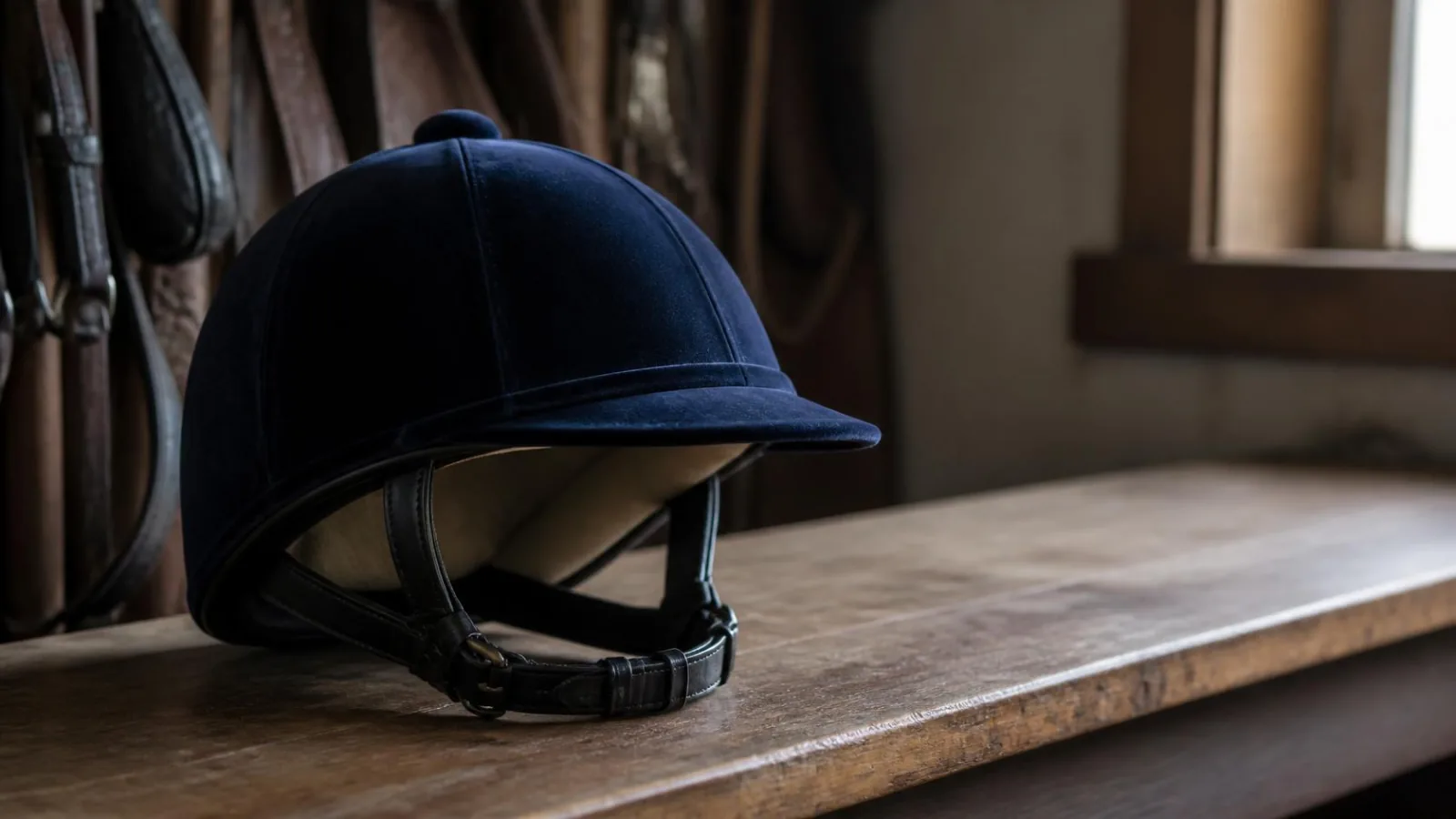
Helmets shift those odds hard. Research on equestrian athletes has linked helmet use to concussion rates dropping from 44 per cent to under 8 per cent, with fewer intracranial injuries and fewer hospital admissions alongside it.
Bike and skate helmets don’t count. They’re built for a different kind of impact and they stop short of the back of the skull, which is exactly where you tend to land.
What Certification Should You Look For?
Look inside the shell. You want a sticker showing ASTM F1163 certification and SEI verification.
Now here’s what beginner guides almost never mention. The version number matters. Right now you’re looking for ASTM F1163-15 or ASTM F1163-23, and anything certified to an older revision isn’t considered acceptable by US Pony Club any more, even though it’ll look identical on the shelf.
Two other things apply to every helmet, whether you borrow it or buy it. They expire, usually five years from purchase, because sweat, sunlight, heat, hair products and cleaning sprays slowly break down the shell and the liner. And any helmet that’s taken a real impact is done, however perfect it looks, because the foam inside is meant to crush exactly once.
So you’ve got a two-line checklist when you buy. Check the certification version. Check the history. A helmet whose story you know is a good helmet, and one nobody can account for is the one you put back.
What Trousers Should You Wear?
Anything long and close-fitting will do for a first lesson, so long as there’s no thick seam running down the inside of the leg, which means leggings work and so do yoga trousers, track bottoms and slim jeans. Just don’t make a habit of it. None of them is actually built for the saddle, and you’ll feel the difference once you’re riding every week.
For a first riding lesson the enemy here is friction. Your inner leg sits against the saddle flap for a solid hour, and a raised seam in that spot will rub a sore patch in about fifteen minutes, which is why the usual advice to just wear jeans is only half right. Flat inseam, you’re fine. Thick ridged seam, you’ll regret it by the end of the lesson.
Skip anything baggy, partly because loose fabric can snag on the saddle or the stirrup if you come off, and partly because it hides your leg from the instructor, who’s spending the whole lesson trying to see what that leg is doing.
Once you’re riding regularly you’ll probably drift towards breeches or jodhpurs, cut without an inner seam and gripped at the knee, or riding tights if you’re mostly schooling. Neither one is necessary on day one.
What Shoes Are Safe to Ride In?
Something with a small defined heel, somewhere between half an inch and an inch and a half, on a smooth or lightly patterned sole.
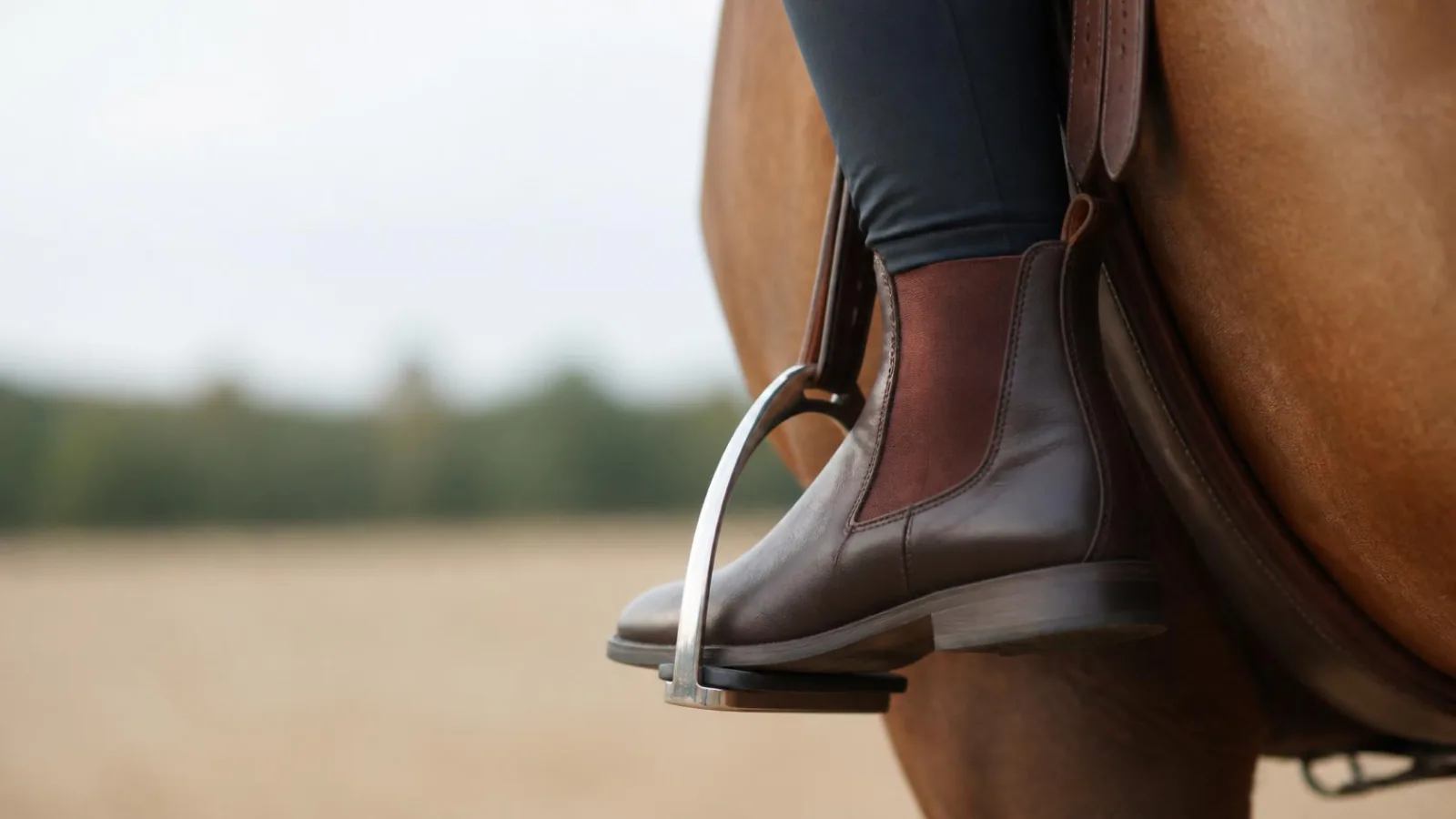
There’s one reason for the heel: it stops your foot sliding forward through the stirrup. A foot that goes all the way through during a fall can stay attached to a horse that’s still moving, and that’s the scenario most riding safety rules are quietly built around.
The sole doesn’t get nearly as much attention and it matters just as much, because deep hiking tread can wedge into the stirrup and won’t let go, wide walking boots do the same thing, and a flat trainer fails the opposite way by sliding straight through.
Most people end up in an ankle-height paddock boot with a low heel, usually with half chaps pulled over the trousers so the stirrup leather stops pinching the calf, though it’s always worth asking whether the barn can lend you a pair first.
What Should You Wear on Top?
A fitted long-sleeved layer is ideal, or short sleeves with something you can peel off over the top once you warm up.
Sleeves stop the reins rubbing your forearms and keep the sun off if you’re riding outside, and the fitted part matters for the same reason it does below the waist: your instructor needs to see your shoulders, back and arms, and a loose hoodie hides all three of them.
Thin layers beat one thick one every time, because riding’s more physical than it looks from the rail, an indoor arena in February is colder than you’d expect, and a July lesson is a great deal hotter. Once you’re riding weekly, the riding shirts and casual tops that actually move moisture away start feeling worth the money.
Tie long hair back, and leave the jewellery at home, because dangling earrings and rings have a nasty habit of catching on tack.
Do You Need Gloves for a First Lesson?
Not for a first riding lesson, strictly speaking, but they earn their place fast. Reins slide through bare hands, especially in warm weather or on a strong horse, and new riders grip much harder than they need to, so you end up with a blister in the web between thumb and forefinger about forty minutes in.
Any close-fitting glove without a fat seam across the palm will do the job. Gardening gloves are too bulky and ski gloves are hopeless.
What Should You Buy Now, and What Can Wait?
Almost all of it can wait, and working out what to wear for your first horseback riding lesson shouldn’t really cost you anything, even though riding’s a sport where beginners routinely get sold an entire wardrobe before they’ve found out whether they enjoy trotting.
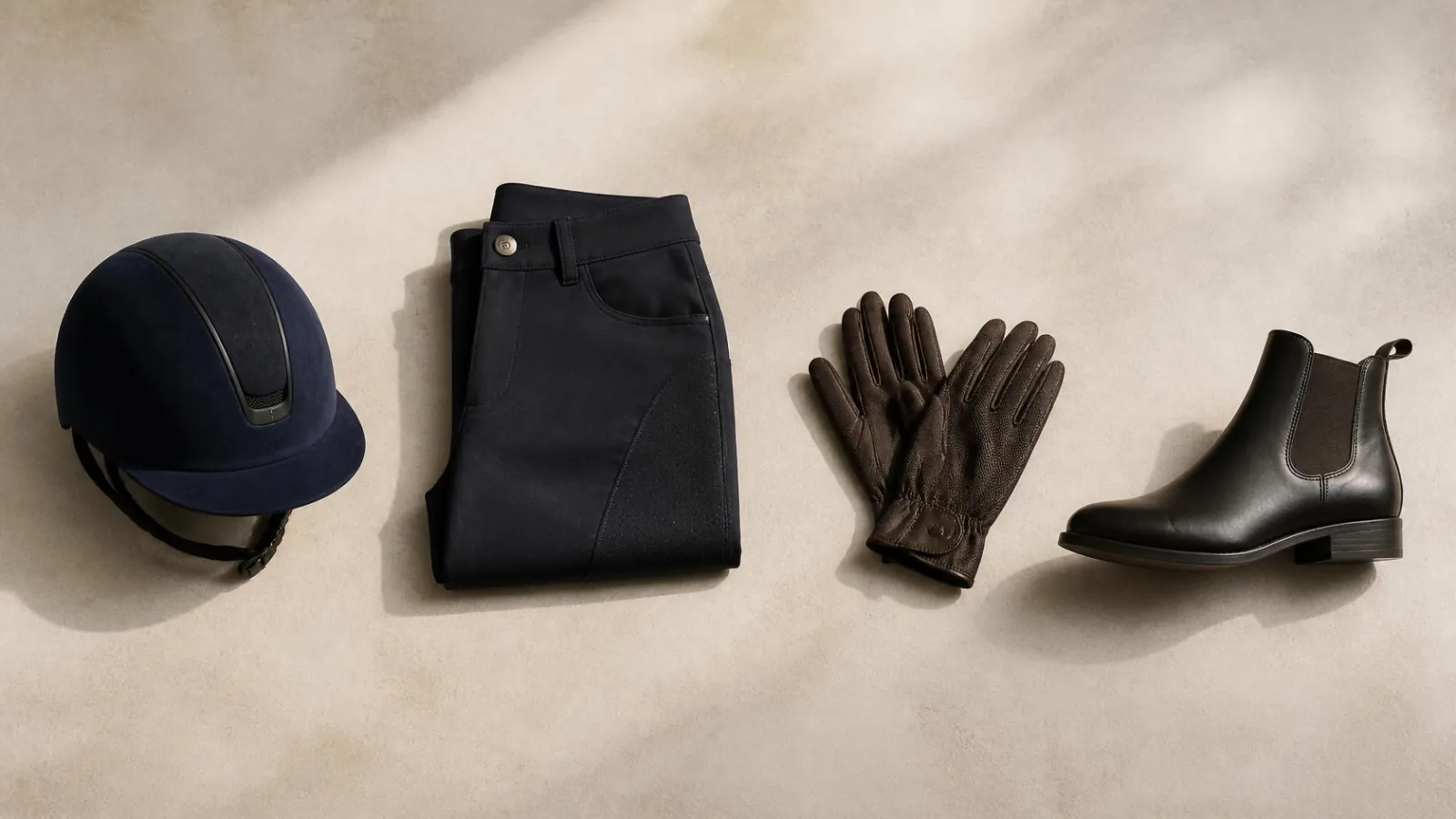
Before lesson one, buy nothing at all, assuming the barn lends helmets. The one exception is a boot with a small heel, and only if there’s genuinely nothing suitable already in the house.
Somewhere around lesson five to ten, once the habit has stuck, your own certified helmet starts to make sense, and that’s usually when half chaps, breeches or riding tights, and a pair of gloves start earning their place too.
Much later, if ever, come the tall boots, the show clothing, a body protector or air vest unless you’re jumping, and anything carrying a brand somebody’s told you that you ought to want.
Give it a month before deciding any of this. By then you’ll know whether you’re a Saturday morning rider or someone who’s about to rearrange their entire life around a horse, and you can spend accordingly.
| Before lesson one | Around lesson five to ten | Much later, if ever |
|---|---|---|
| Nothing, if the barn lends helmets | Your own certified helmet | Tall boots |
| A boot with a small heel, only if nothing suitable is in the house | Half chaps | Show clothing |
| Breeches or riding tights | A body protector or air vest, unless you’re jumping | |
| Gloves | Anything carrying a brand somebody told you to want |
What Actually Happens at a First Lesson?
Less riding than you’d think. A first lesson usually means meeting the horse, learning to lead it, watching someone show you how to mount, and only then getting on, so out of a sixty minute booking you might spend twenty to thirty minutes actually mounted, most of that at a walk.
Group lessons across the United States generally run forty to eighty dollars an hour and private lessons sit somewhere between fifty and a hundred and ten, though regional variation is enormous.
Turn up fifteen minutes early if you can, because barns run on the horse’s schedule rather than yours, and if you’re late yours has been standing there tacked up and waiting for you.
Frequently Asked Questions
Can I wear leggings to my first riding lesson?
Yes, and honestly they’re one of the better things you can turn up in, because there’s no inner seam sitting between your leg and the saddle. Just go for a thicker pair rather than something sheer, which won’t give you much protection at all once you’re an hour in.
Can I ride in jeans?
Yes, provided they’re slim through the leg with a flat inside seam, which rules out most of the heavily distressed ones. Skinny and straight cuts tend to be fine, while a thick ridged seam will chafe and stiff denim stops your leg lying properly against the saddle.
Do I need to buy a helmet before my first lesson?
Usually not, since most schools keep certified helmets to lend to beginners, sometimes free and sometimes for a couple of dollars, so it’s worth asking when you book and then buying your own once you know you’re staying.
What shoes can I wear if I don’t own riding boots?
Anything smooth-soled with a small heel will get you through the lesson, so an ankle boot or a Chelsea boot from the cupboard usually does the job. What you want to avoid is flat-soled trainers, and hiking boots too, since their deep tread and wide fit can jam in the stirrup.
How long does a first riding lesson last?
Around an hour, though only twenty to thirty minutes of that tends to be spent actually on the horse, with the rest going on meeting them, tacking up, and getting on and off.
What should a child wear for a first riding lesson?
Exactly the same rules as an adult, which means a certified helmet, long close-fitting trousers and a boot with a small heel. Children being children, they’ll outgrow all of it within a season, which is why borrowing or buying pre-owned makes so much sense at this stage.
The Takeaway
Leggings or slim jeans, a fitted long-sleeved top, a boot with a small heel, and a helmet borrowed from the barn will get you through your first lesson perfectly well. That’s the complete and safe answer to what to wear for your first horseback riding lesson, and if those clothes are already hanging in your wardrobe then it costs you nothing at all to start.
The specialist gear only becomes worth buying once riding has turned into a habit rather than an experiment, and when that day comes it’s worth remembering that riding kit is built to survive years of hard use while children outgrow it in months, which is exactly why so much good equipment ends up going round to a second and third rider.
Reequestrian is the US peer-to-peer marketplace where riders buy and sell English apparel and tack directly. When the breeches stop fitting or the show shirt gets outgrown, list them with us and let them find their next rider.


