


“Is horse riding a sport?” (or “is horseback riding a sport?”) is asked more than a thousand times a month in the US, usually by someone who has just been told the horse does all the work. This article answers it with evidence rather than opinion: how the Olympic movement and American college athletics classify it, what the exercise physiology tables say a rider burns, what trauma surgeons say about the risk, and, for balance, the one part of the argument where the skeptics have a point.
The short answer
Yes. Horse riding is a sport by every definition institutions use: it has been in the Olympic Games since 1900 and continuously since 1912, it is governed by an international federation recognised by the IOC, it is an NCAA sport for women in the United States, it burns between 3.8 and 9 times resting energy depending on the pace, and it puts more riders in hospital per hour than football or motorcycle racing. What it is not is a sport where the athlete’s effort looks like effort from the rail, which is where the question comes from.
Why people ask: the horse “does all the work”
The objection is always the same: the horse runs, jumps and sweats, and the rider sits. It sounds reasonable if you have never done it, for the same reason a good dressage test looks like nothing is happening. The rider’s job is to make a 1,200-pound animal with its own opinions do something precise while appearing to do nothing at all. The effort is isometric, continuous and invisible, and the better the rider, the less of it you can see.
The rest of this article is the evidence that the effort is real.
The Olympics: in the Games since 1900
Equestrian sport entered the modern Olympics at the Paris Games of 1900 and became a permanent fixture at Stockholm in 1912, with the three disciplines still contested today: dressage, eventing and jumping. Team and individual medals have been awarded in all three since 1928 (The Plaid Horse, July 2024).
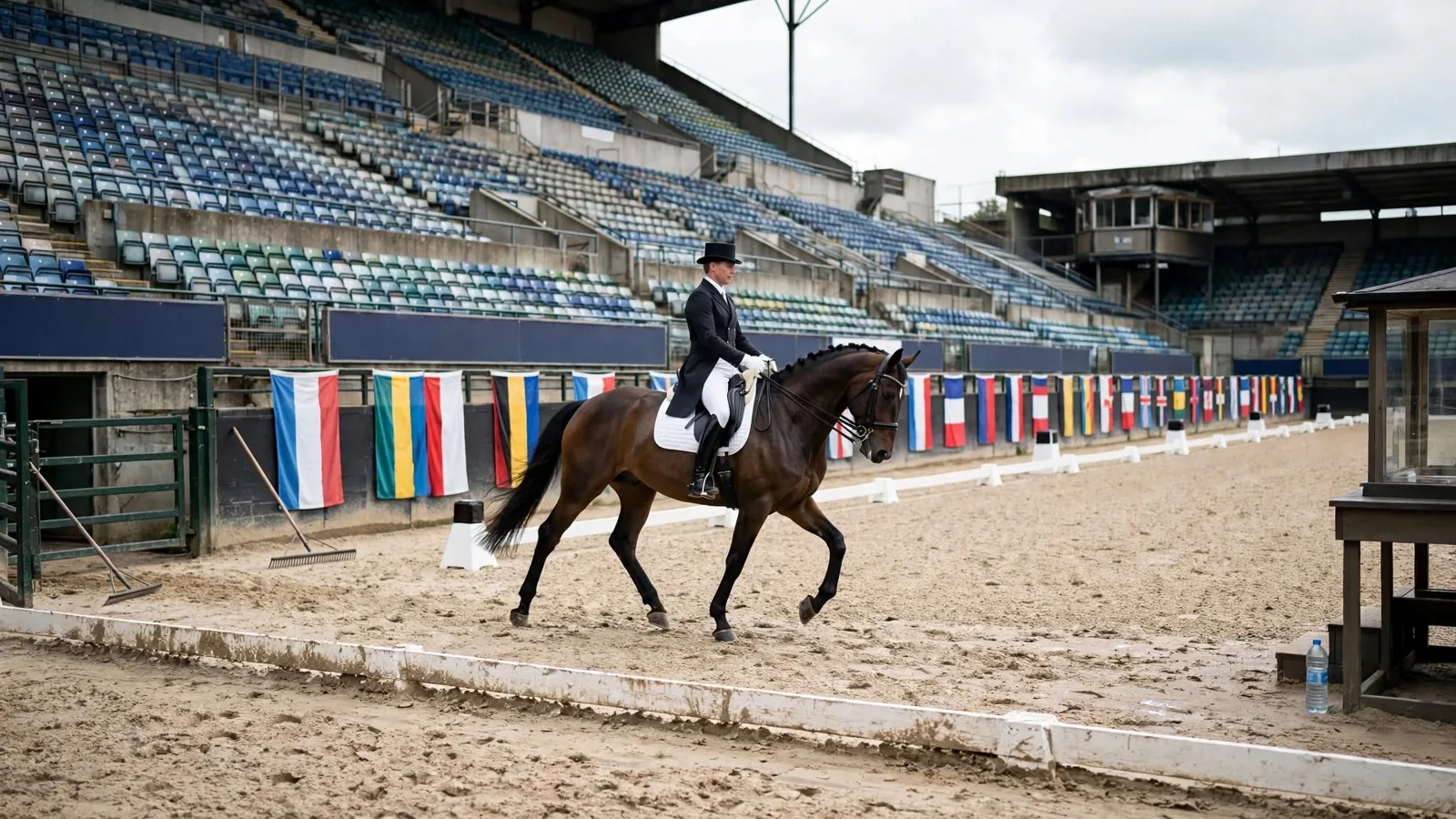
Two things about the Olympic status matter for the question:
The International Olympic Committee recognises the FEI, the Fédération Equestre Internationale, as the world governing body, on the same footing as the federations for athletics or swimming. In the US, US Equestrian is the national governing body recognised by the US Olympic and Paralympic Committee, and it publishes a rulebook that runs to hundreds of pages per discipline (our hunter jumper attire guide quotes the dress rules from it).
Men and women compete directly against each other. Equestrian is one of only two Olympic sports in which they do, with no separate events and no quotas (The Plaid Horse). Women were admitted first to dressage in 1952, then to jumping and eventing over the following decade. The gold medal at Tokyo 2020 in individual dressage went to a woman; the gold in individual jumping went to a man; nobody at the FEI thinks that needs separate podiums.
The NCAA: a varsity sport with scholarships
In American college athletics, equestrian is an NCAA Emerging Sport for Women. Twenty-seven colleges and universities sponsor varsity equestrian teams and “more than 1,400 women are listed on NCAA team rosters across the United States,” according to US Equestrian’s page on the National Collegiate Equestrian Association, the governing body for NCAA competition.
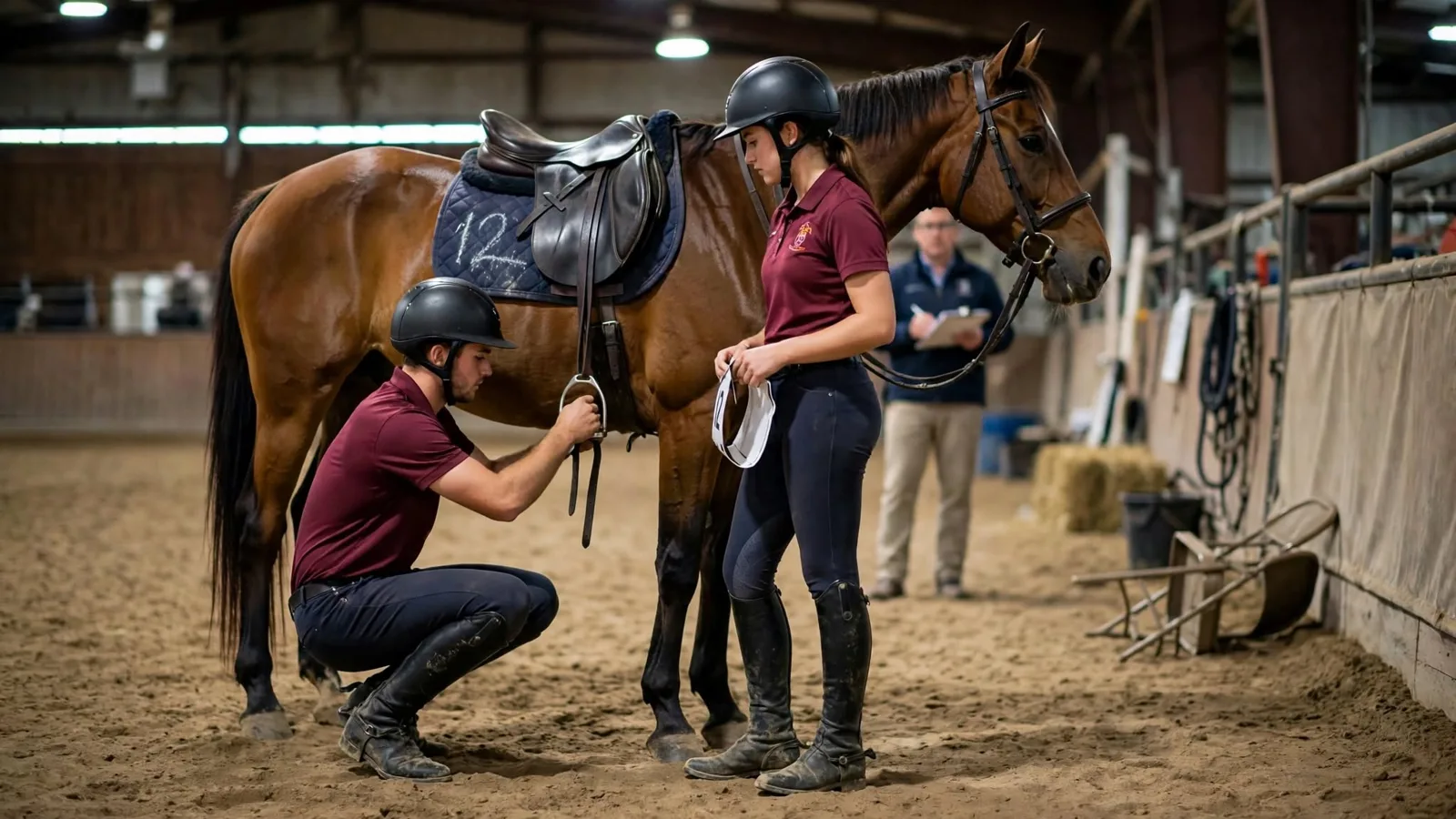
The NCEA format is the strongest single argument in this article, because it removes the horse from the equation. Teams compete head to head in four events (jumping seat flat, jumping seat fences, western horsemanship and reining), and “student-athletes from each team are matched to their mounts by random draw prior to each meet.” Two riders ride the same unfamiliar horse in the same test, and the higher score wins the point. Whatever the horse contributes, it contributes equally to both. The difference in the score is the athlete.
NCAA equestrian is an equivalency sport, meaning programs may split up to 15 scholarships among more riders. Students are recruited, signed and funded exactly as they are in swimming or soccer.
The physiology: what a rider actually burns
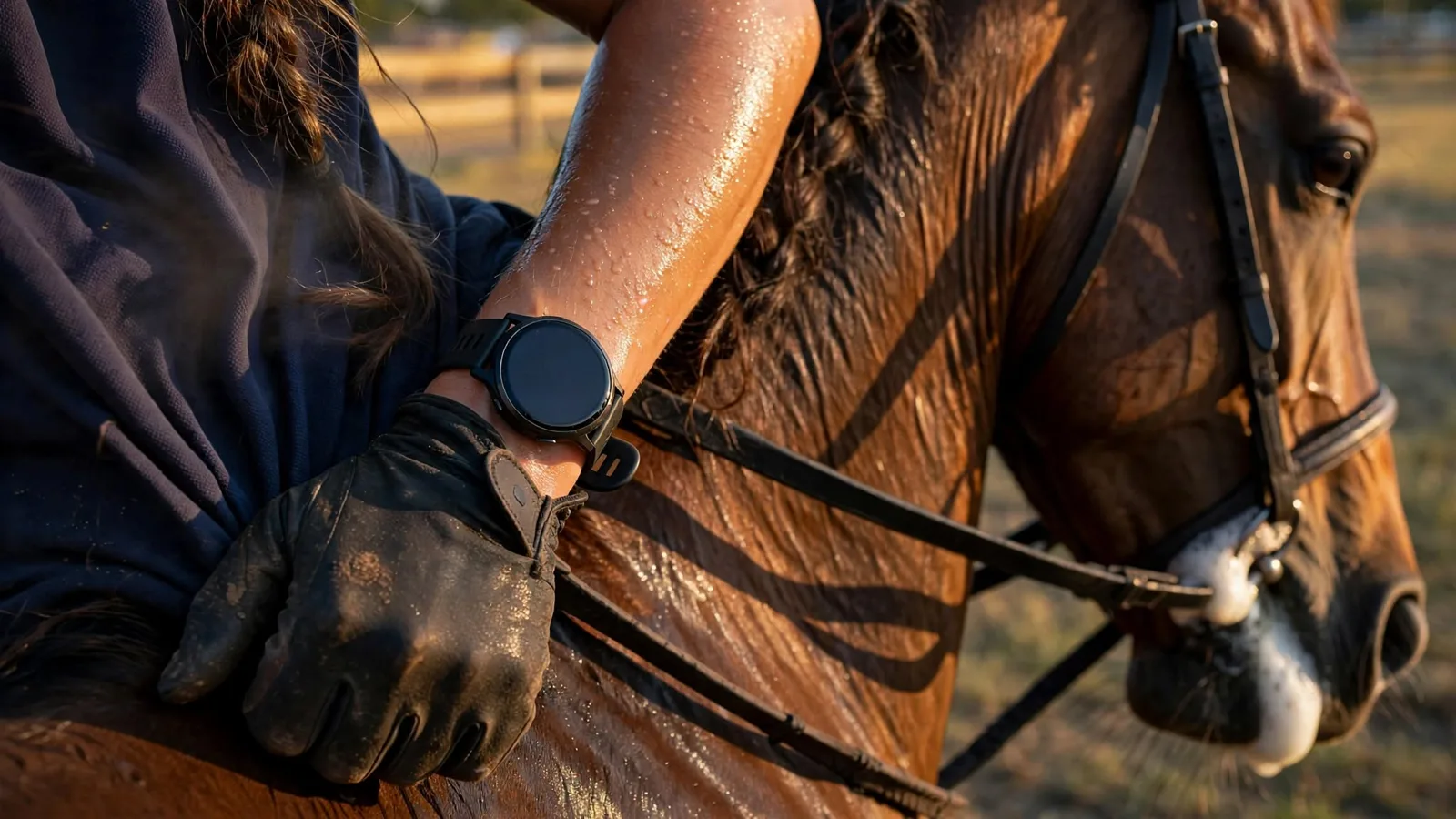
The Compendium of Physical Activities is the reference used in exercise science to assign an energy cost to activities, expressed in METs (multiples of resting metabolic rate). Its horseback riding entries (Compendium of Physical Activities, sports section):
| Activity | Compendium code | METs |
|---|---|---|
| Horseback riding, walking | 15400 | 3.8 |
| Horse grooming, maintenance, saddling tasks | 15380 | 4.5 |
| Horseback riding, general | 15370 | 5.5 |
| Horseback riding, trotting | 15390 | 5.8 |
| Horseback riding, canter or gallop | 15395 | 7.3 |
| Horseback riding, jumping | 15402 | 9.0 |
For context, the same tables put walking at 3 mph on level ground at 3.5 METs and running a 10-minute mile at 9.8. So the walk on a horse is a brisk walk, trot and canter sit between a brisk walk and a jog, and an hour of jumping is an hour of running.
In calories, using the standard formula (METs x body weight in kilograms x hours), a 150-pound (68 kg) rider burns roughly:
- Walking: about 260 calories an hour
- Trotting: about 395 calories an hour
- Cantering or galloping: about 495 calories an hour
- Jumping: about 610 calories an hour
Those are the numbers behind the “400 calories an hour” line that appears in every other article on this topic, and they come with a distinction the other articles miss: the 4.5 METs for grooming and saddling means the hour before the ride is a workout too. A rider who tacks up, rides for an hour with trot and canter work, and cools the horse out has done two and a half hours at 4 to 7 METs, which is a moderate-to-vigorous training session by any public health definition.
The physical demands are also specific, not general. Riding is anti-rotation and anti-extension core work against a moving base, with sustained isometric load through the adductors and calves, which is why riders who are fit from running still find their first month in the saddle exhausting. Our guide to exercises for equestrians goes through the research on what riding asks of the body and how off-horse training changes it.
The injury data: riskier per hour than football or motorcycle racing
Whether riding is a sport is one question. Whether it is a dangerous sport (also asked, 140 times a month) has a clearer answer.
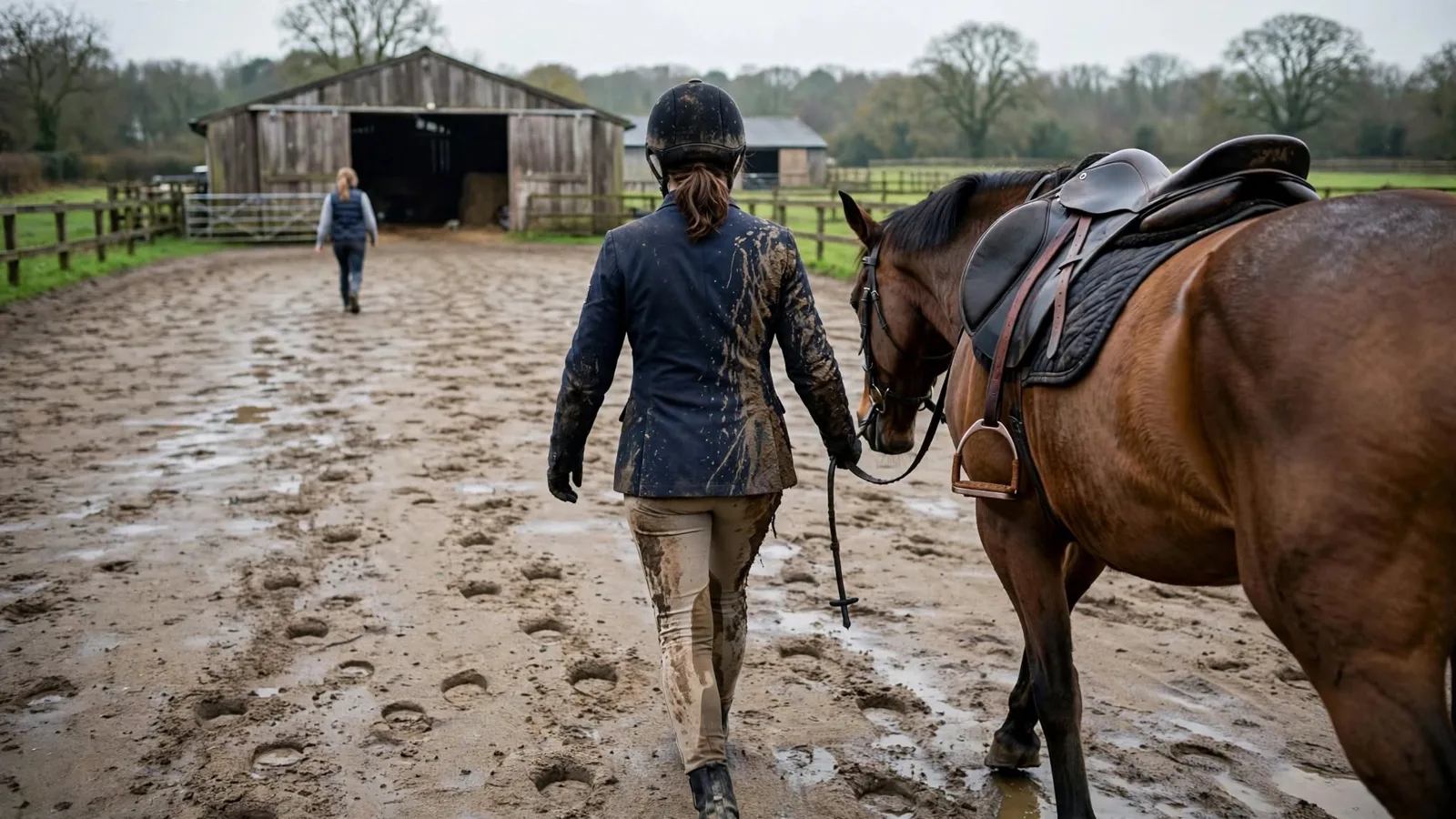
A ten-year analysis of the US National Trauma Data Bank, covering 24,791 adults injured in equestrian activity between 2007 and 2016, concluded that “hospital admission risk from horseback riding is higher than football, auto and motorcycle racing, and skiing” when controlled for hours of activity (Trauma Surgery & Acute Care Open, 2021, reported by Insurance Journal).
An earlier Canadian study of ten years of major equestrian trauma at a single centre found that among 151 seriously injured riders, 54 percent had chest injuries and 48 percent head injuries, with 7 percent dying of their injuries and 45 percent needing surgery (Ball et al., American Journal of Surgery, 2007). The figure most often quoted alongside that study, roughly one hospital admission per 2,000 hours of riding against one per 7,000 hours of motorcycling, is the comparison that gave riding its reputation as riskier than motorcycling.
This is not an argument for fear; it is the reason the sport has certified helmets, body protectors that are mandatory on cross-country, and a rulebook that requires a fastened chin strap the moment a rider is mounted. It is also, for the purposes of this article, the end of the “the horse does the work” argument. Nobody is admitted to a trauma centre from a spectator sport.
What makes it a sport, in the definitions people use
Different bodies define “sport” differently, and riding meets all of them:
| Definition | Source | Does riding meet it? |
|---|---|---|
| Physical exertion and skill, with competition under agreed rules | dictionary definitions | Yes: 5.5 to 9 METs, judged and timed competition, a federation rulebook |
| Governed by an international federation recognised by the IOC | Olympic movement | Yes: the FEI, since 1921, with equestrian in every Games since 1912 |
| Sponsored as an intercollegiate varsity sport | NCAA | Yes: Emerging Sport for Women, 27 programs, scholarships |
| Measurable, trainable athletic performance | sports science | Yes: expert riders show measurably more stable trunks and steadier rein force than novices on a simulator, and eight weeks of rider fitness work changes pressure on the horse’s back |
| Meaningful injury risk from the activity itself | trauma medicine | Yes, more than most contact sports per hour |
Where the skeptics have a point
Honesty about the counter-argument makes the case stronger, not weaker.
In some disciplines the horse’s quality decides more than the rider’s. A hunter class judges the horse’s movement and jump; a mediocre rider on a superb horse can beat a superb rider on a mediocre one. That is a fair criticism of hunters as a test of the athlete, and it is exactly why equitation classes exist (the rider is judged) and why the NCEA draws horses at random.
At the recreational level it can be as little exercise as you want it to be. A walk on a quiet trail horse is 3.8 METs, the same as a brisk walk, and a lot of people’s only experience of riding is that. So is a lot of people’s only experience of cycling. Nobody concludes that the Tour de France is not a sport.
The horse is a partner, not equipment. This is true and it is the thing that makes equestrian sport unlike any other, but “requires a second living athlete” is a harder test to pass than “requires a ball,” not an easier one.
Why it matters that it is a sport
Beyond the argument at the dinner table, the classification has consequences. It is why USEF’s competition data is now being used to study falls and equipment (every fall at a licensed show has had to be reported since December 2023), why safety standards for helmets and vests are written and enforced, why college scholarships exist, and why a young rider’s parents can reasonably budget for it the way they would for any other sport, which our guide to a child’s first horse show help them do. It is also why a rider’s clothing is athletic equipment rather than costume: the equestrian outfit guide explains what each piece is for.
Sit on a horse at sitting trot for ten minutes without holding on. Then decide.
How we researched this
Olympic history is from The Plaid Horse’s July 2024 history of Olympic equestrian sport. NCAA and NCEA figures are from US Equestrian’s page on the National Collegiate Equestrian Association. MET values are quoted from the Compendium of Physical Activities sports section, with calorie figures calculated for a 68 kg rider using the standard MET formula. Injury findings are from Ball et al., American Journal of Surgery 2007, and the 2021 National Trauma Data Bank analysis in Trauma Surgery & Acute Care Open as reported by Insurance Journal. Rider physiology findings are from the studies cited in our exercises guide. The years women were admitted to each Olympic discipline are as commonly reported in Olympic histories and were not verified against a primary IOC source.
Disclaimer: This article is for general information. Calorie figures are estimates from standard reference values and vary with rider weight, fitness and the horse. Injury statistics describe populations, not individuals; riding carries real risk and appropriate certified safety equipment should always be worn.


