


By the Reequestrian editorial team. Researched from seven rider discussions on Reddit and the Chronicle of the Horse forums (2014 to 2026), manufacturer size charts, and US retail prices checked on September 16, 2026. Sources are listed at the end.
Horse riding gloves are the one piece of English riding apparel that the rulebook never mentions and almost every rider in the show ring wears anyway. They are also the item riders argue about most. Ask a barn full of people whether they ride in gloves and you will get a near-even split, with strong views on both sides.
This guide answers the questions in the order riders ask them: why wear equestrian riding gloves at all, when you need them and when you do not, how to choose between the types, how to size them using the manufacturers’ own charts, why some pairs wear through in weeks while others last years, and where each kind belongs, from the schooling ring to the show ring. A handful of riders are quoted verbatim from public forum posts, attributed by platform, forum and date, and linked to the thread so you can read them in context. Where a rider described their own situation (how often they ride, where they live, what they do), that is noted.
Why do riders wear gloves, and why do some refuse?
Not by rule. The 2026 USEF Rulebook’s attire sections for hunters (HU128), jumpers (JP111.9) and hunter seat equitation (EQ106) do not mention gloves at all. The only place gloves appear in those chapters is the ladies’ side saddle appointments rule. Our hunter jumper attire guide quotes the rules in full.
By convention, yes. Black gloves are expected in the hunter and equitation rings at rated shows, and a judge who sees bare hands will notice. Outside the ring, riders split into three camps, and a 2022 r/Equestrian thread titled “do you ride with gloves?” lays the split out in the riders’ own words.
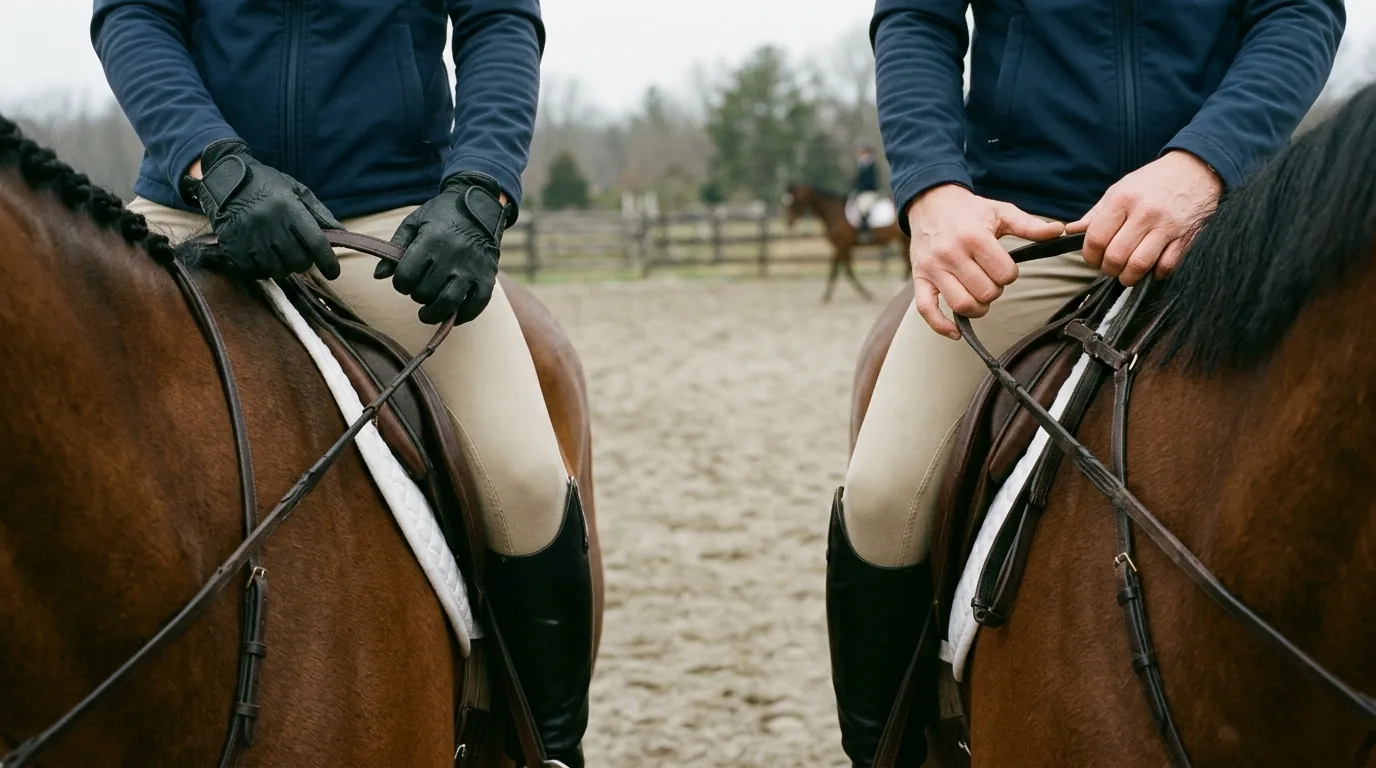
The always camp treats them as safety kit, and several replies made the same point about protection from reins pulled through the hands in a fall or a stumble:
“A bit of a serious note: I consider them nonnegotiable safety equipment. I wear my wedding ring all the time and the last thing I need is a degloving injury.” (u/artemis680, r/Equestrian, April 2022)
The never camp says the same thing about feel and reaches the opposite conclusion:
“I literally cannot ride with gloves. I feel like I have no connection with my horse and no feel of my reins. I ride a decently strong jumper and I feel like my grip is better without them.” (u/alternatefaerie, who rides “a decently strong jumper”, r/Equestrian, April 2022)
The third camp wears them only when it is cold, only when it is hot enough that hands sweat on the reins, or only in the ring. Riders in hot climates in that thread put grip on sweaty reins ahead of every other reason.
The practical answer for a new rider: buy one pair, ride in them for a month, and decide. If you show, you will need a black pair regardless.
How to choose the right type of horse riding gloves
Every pair of equestrian gloves is a trade-off between feel, grip, durability and temperature. The table is the short version; the sections below have the detail.
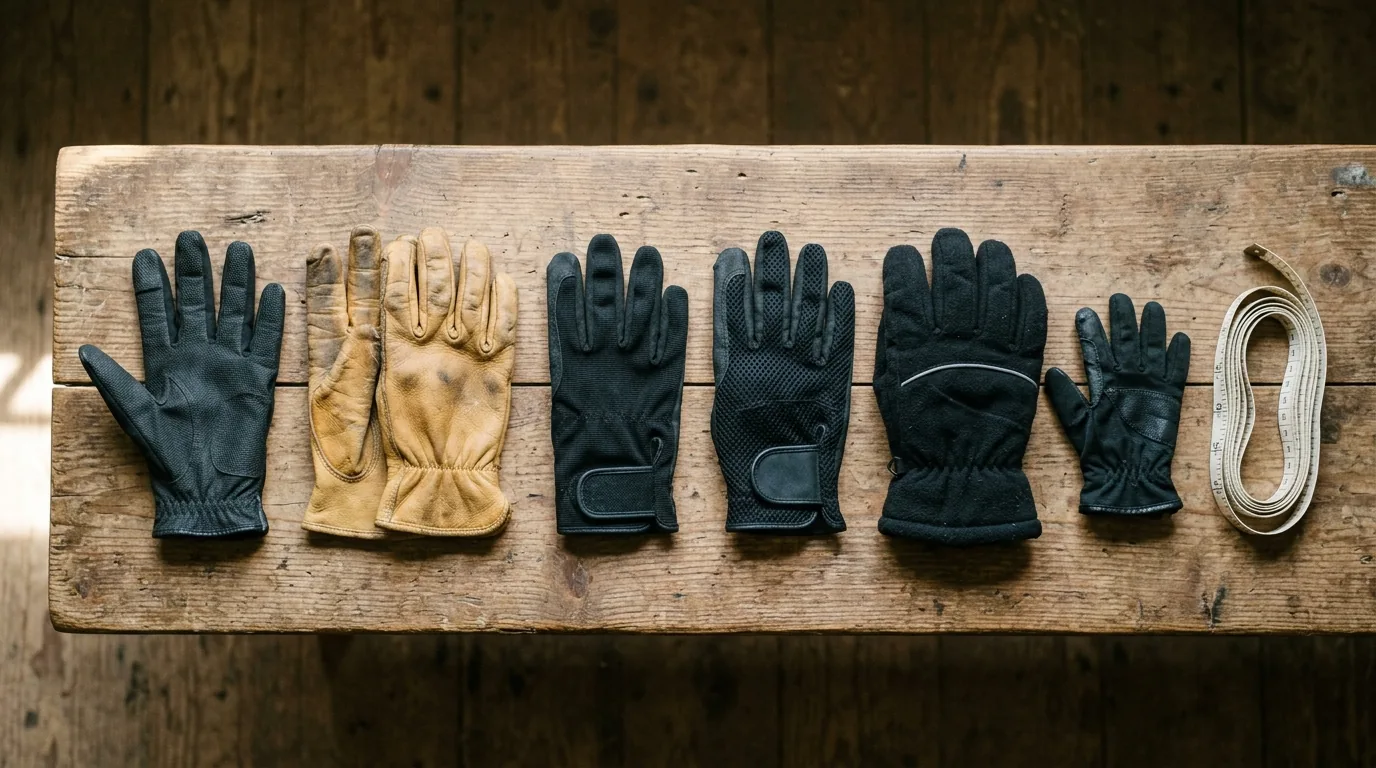
| Type | Palm material | Best for | Weak point | Verified US price range |
|---|---|---|---|---|
| Synthetic grip glove | Synthetic suede or microfiber | Everyday schooling, showing, feel | Wears through at the rein contact points | $39 to $80 |
| Leather riding glove | Deerskin, sheepskin or goatskin | Durability, moulds to the hand | Stiffer at first, slower to dry | $30 to $80 |
| All-weather or economy glove | Synthetic or synthetic suede | Barn work, lessons, beginners | Bulkier, less feel | $24 to $30 |
| Summer or mesh glove | Mesh back, thin grip palm | Heat, sweaty hands | Thin palm wears fastest | $50 to $70 |
| Winter riding glove | Fleece, Polartec, Thinsulate, insulated leather | Cold-weather riding | Bulk reduces feel | $40 to $75 |
| Show glove | Thin black synthetic or leather | The show ring | Not built for daily wear | $26 to $50 |
| Kids’ glove | Synthetic | Growing hands | Outgrown before worn out | $25 to $28 |
The ranges above come from these individual listings, checked on the retailers’ sites on September 16, 2026:
| Glove | Type | Price | Seen at |
|---|---|---|---|
| Roeckl Roeck-Grip | Synthetic grip | $54.95 to $69.95 | North Shore Saddlery, Wyldewood Tack |
| Roeckl Messara | Everyday grip | $39.95 | North Shore Saddlery |
| Roeckl Malaga | Grip, leather and synthetic | $79.95 | North Shore Saddlery |
| Ovation LuxeGrip StretchFlex | Synthetic grip | $38.95 | Wyldewood Tack |
| Equiline X-Grip | Synthetic grip | $75.00 | North Shore Saddlery |
| SSG Rancher | Deerskin leather | $55.00 | Wyldewood Tack |
| Kunkle Barn Glove | Sheepskin leather | $29.99 | Wyldewood Tack |
| RSL by USG Osaka | Leather with mesh | $79.95 | Wyldewood Tack |
| SSG All Weather | Economy, synthetic suede | $27.00 to $30.00 | Wyldewood Tack |
| SSG Schooler | Economy, synthetic | $23.95 | Wyldewood Tack |
| Roeckl Roeck-Grip Lite | Summer mesh | $64.95 to $69.95 | North Shore Saddlery, Wyldewood Tack |
| Roeckl Laila | Summer mesh | $59.95 to $59.99 | both |
| Equiline Summer | Summer mesh | $64.00 | North Shore Saddlery |
| EGO7 Air Mesh | Summer mesh | $59.00 | North Shore Saddlery |
| Kunkle Mesh | Summer mesh | $49.99 | North Shore Saddlery |
| SSG 10 Below | Winter, waterproof | $49.99 to $69.95 | North Shore Saddlery, Wyldewood Tack |
| SSG Winter Rancher | Winter, deerskin | $65.95 | Wyldewood Tack |
| Roeckl Warwick Polartec | Winter | $54.95 to $64.95 | North Shore Saddlery |
| Roeckl Roeck-Grip Winter | Winter | $64.95 to $74.95 | North Shore Saddlery |
| Ovation LuxeGrip Winter | Winter, waterproof | $39.95 | Wyldewood Tack |
| Kerrits Hand Warmer | Winter | $49.00 | Wyldewood Tack |
| Ovation Ladies Performerz Show Glove | Show | $25.95 | Wyldewood Tack |
| Kunkle Premium Show | Show | $49.99 | North Shore Saddlery |
| Ovation Kids Performerz | Kids | $27.95 | Wyldewood Tack |
| Kerrits Kids Thermo Tech | Kids | $25.00 | Wyldewood Tack |
These are the prices listed on September 16, 2026 at North Shore Saddlery and Wyldewood Tack, two US tack retailers, and they do not include shipping or tax. Prices change and sales come and go, so for the current price of any glove please check the retailer’s or the brand’s website directly. The SSG Winter Training Glove named by riders in the winter section is not priced here because neither retailer listed it on that date.
When a synthetic grip glove is the right choice
The most common glove in an English barn. Roeckl’s Roeck-Grip is the reference point most riders compare everything else to, and Roeckl came up in five of the seven threads we read. The appeal is feel: the palm is thin enough that riders describe it as riding bare-handed with grip. The complaint is the same in every thread, a decade apart: it wears through.
“Love roeckl gloves so much but my gosh they don’t last long for the price point.” (keenkick725, Chronicle of the Horse Hunter/Jumper forum, November 2023)
The same complaint runs back a decade. A December 2016 r/Equestrian thread was started by a rider on an eight to ten rides a week schedule whose new Roeckl Chesters showed wear marks after a single ride; another rider in that thread on a similar schedule got about six months from a pair. Lifespan scales with use: a July 2026 thread had a once-a-week rider whose Roeckls had lasted a couple of years.
When to choose leather horse riding gloves
Leather moulds to the hand, lasts longer, and is the traditional choice for the show ring. The trade-off is a stiffer first few rides and a longer dry time if they get wet. Riders in the threads who switched from synthetic to leather for durability named Heritage most often; one rider in the 2016 thread was on a fourth pair of Heritage after several pairs of SSG synthetics had come apart.
Not every leather glove holds up. One COTH member received a pair of Hauke Schmidt gloves as a gift and reported they “fell apart in under a year,” with the buttons on the back glued rather than stitched (outside_leg, COTH Hunter/Jumper forum, November 2023), while another member in the same thread said their two rotated pairs “are lasting forever” (LSBC, same thread). Same brand, opposite experience, which is a fair summary of glove durability generally.
When an all-weather or economy glove is enough
SSG’s All Weather glove at $27 to $30 and the SSG Schooler at $24 are the gloves most lesson programs put on beginners. They are bulkier and offer less feel than a grip glove, and riders in the threads reported SSG’s cheaper synthetic gloves wearing out faster than the brand’s leather and technical lines. Their advantage is cost: at that price a pair that lasts a season is not a loss.
When to switch to summer and mesh gloves
A mesh back with a thin grip palm. They solve the sweaty-hands problem and create a new one, because the thin palm is the fastest-wearing of any type. A June 2026 sizing thread was started by a rider choosing between two sizes of exactly this style, which is covered under sizing below.
When and how to choose winter horse riding gloves
The problem with winter gloves is bulk. Riders want warmth without losing the ability to close their fingers on the rein. A 2014 COTH thread on winter gloves still reads as current, and one glove was named by three separate members, two of whom said the bulk did not cost them feel and that the gloves lasted:
“I live in WI, where the actual air temperature (without accounting for wind chill) is frequently in the negatives. I have tried a ton of winter riding gloves, and found the SSG Winter Training Gloves to be the best out there in terms of feel.” (FineAlready, a rider in Wisconsin, COTH Dressage forum, November 2014)
The other approach in that thread was layering: a rider in north Georgia rode through wind chills in the teens in regular Roeckl Chesters with a silk glove liner underneath on the coldest days. Kerrits’ winter gloves were mentioned for being less bulky, and the Roeckl Warwick fleece glove was praised for warmth with the note that its silicone grippers wore off quickly.
Current US prices for winter gloves: SSG 10 Below $50 to $70, SSG Winter Rancher $66, Roeckl Warwick $55 to $65, Roeckl Roeck-Grip Winter $65 to $75, Ovation LuxeGrip Winter $40.
How to size horseback riding gloves
Horseback riding gloves are sized in inches by US brands and in centimeters or numbered sizes by European brands. The measurement is the same either way.
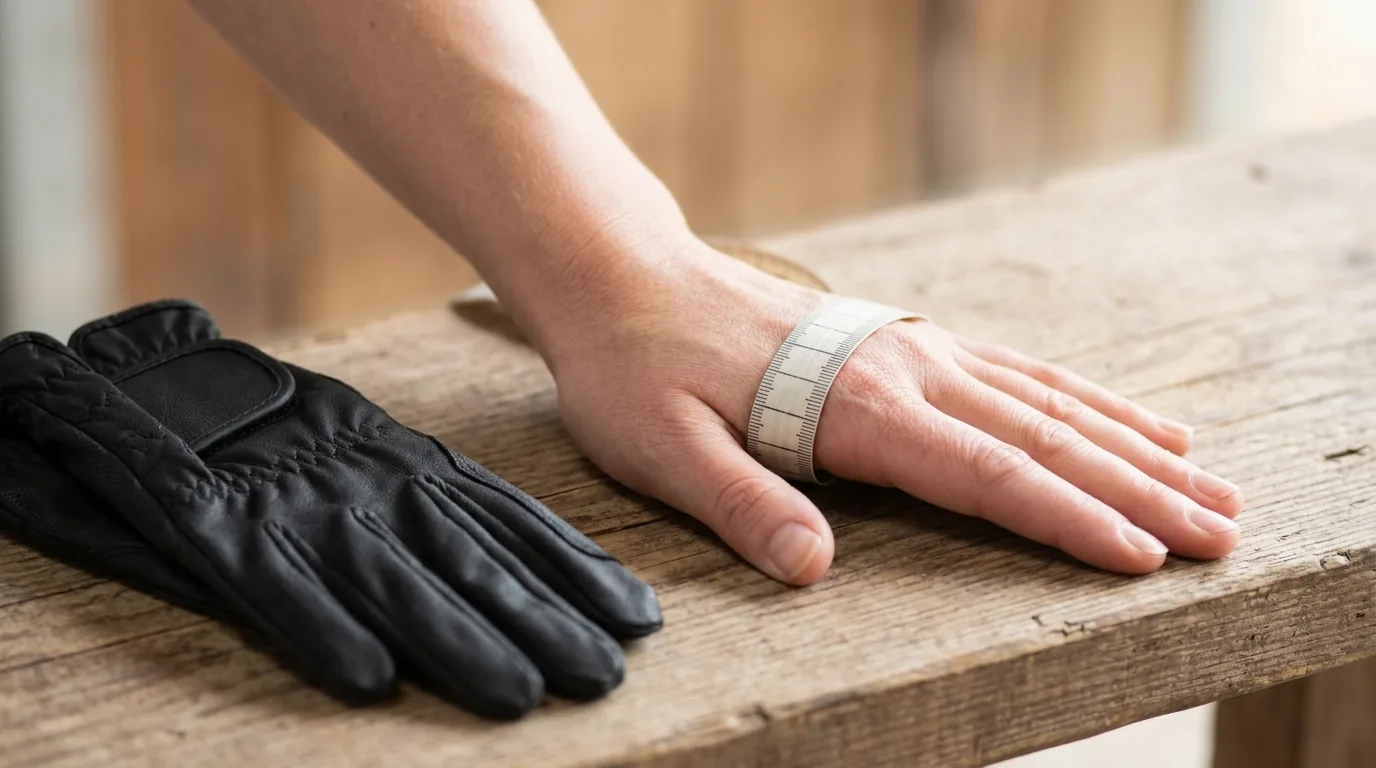
The method, as Dover Saddlery’s sizing guide puts it: “Measure around the widest part of your hand, excluding your thumb. The tape measure should be snug and straight, but not tight. The number of inches around your hand represents your glove size.” Round up if you land between half-inch sizes. This is the method for SSG, Heritage, Ovation and most US brands.
Roeckl sizes in numbered European sizes. Its own instruction is to “place it tightly around the palm of your hand at the widest point, just below the knuckles. Leave the thumb outside and read the measurement.” Roeckl’s published women’s chart:
| Hand circumference | Roeckl size |
|---|---|
| 14.5 cm (5.7 in) | 6 |
| 15.5 cm (6.1 in) | 6.5 |
| 17 cm (6.7 in) | 7 |
| 18.5 cm (7.3 in) | 7.5 |
| 20 cm (7.9 in) | 8 |
| 21.5 cm (8.5 in) | 8.5 |
Men’s sizes run 7.5 (18.5 cm) to 10.5 (27 cm) on the same scale. Roeckl’s own advice on the in-between case: “If you are between two sizes, we recommend that you take the smaller size, as the natural leather will adjust to your hand over time and can widen slightly.”
Riders agree with the manufacturer, with two exceptions. In a June 2026 r/Equestrian thread on whether to size up or down, the top-voted reply was to go form-fitting over loose because leather stretches a little, and a commenter who works for a glove brand said their gloves are meant to fit like a second skin.
The exceptions: size up if you keep long nails, because a tight fingertip will push a nail through the seam, and size up if your joints swell, which one rider raised for exactly that reason. And note the material: leather stretches, most synthetics do not, and one rider in that thread warned that some synthetic gloves can shrink in the wash.
Women’s versus men’s gloves. The difference is the pattern, not just the size. Women’s gloves are cut with a narrower palm relative to finger length; men’s are wider. A man with small hands is usually better in a men’s 7.5 than a women’s 8. Kids’ gloves are cut shorter in the finger again.
Why riding gloves wear out, and which ones last
Nobody in any thread claimed a synthetic grip glove lasts more than a year under daily riding. The claims for longer life came from three places: SSG’s technical and leather lines, a few premium European brands, and keeping riding gloves for riding only.
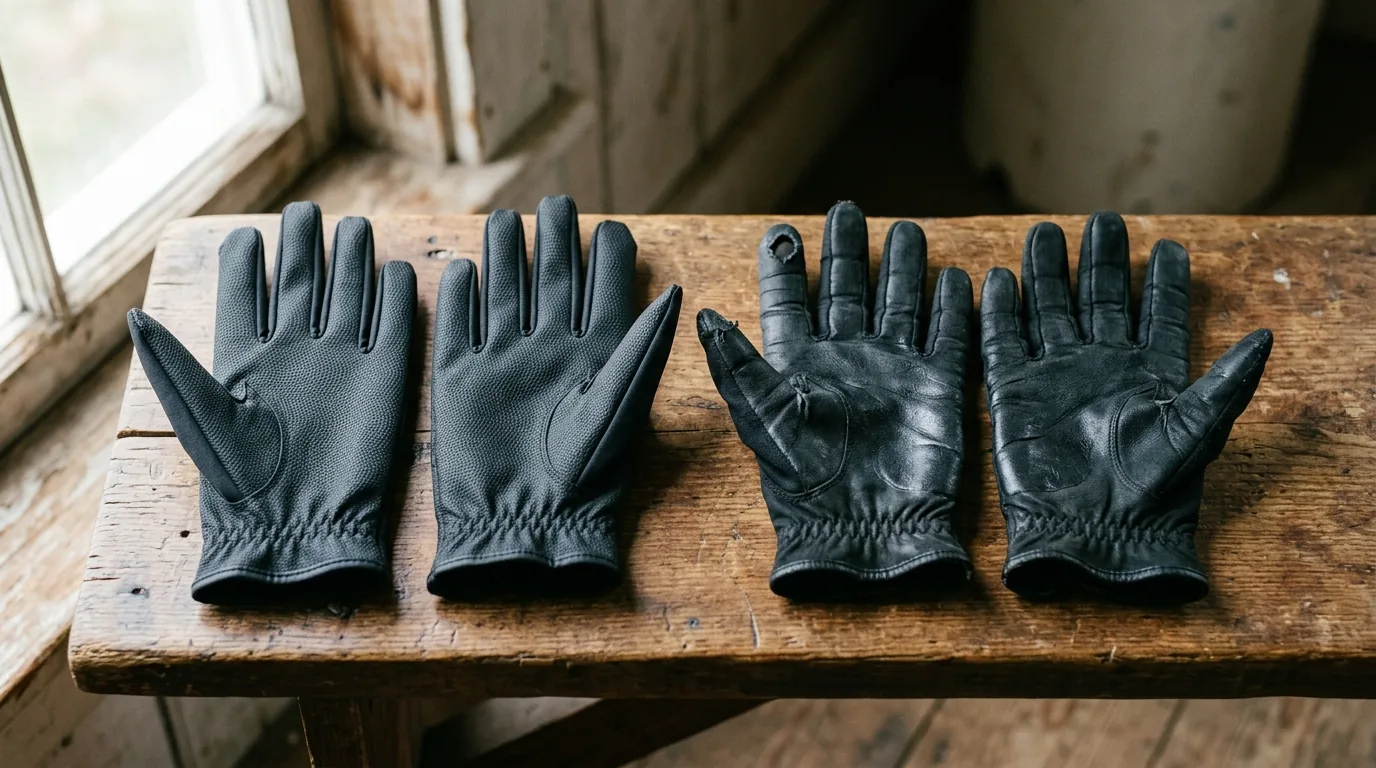
“SSG technical gloves. They look weird but they’re going on 2 or 3 years now with no signs of needing to be replaced yet, previously was getting a new pair of roeckls every year it seemed.” (dr5627, COTH Hunter/Jumper forum, November 2023)
In the July 2026 thread, riders who had moved on from Roeckl named Uvex and Samshield as the pairs that had lasted longest for them, one of them a professional riding daily. The rider who started that thread was replacing gloves every two to three weeks because they wore them for grooming and scratching the horse as well as riding. The most useful reply was not a brand at all:
“Keep your riding gloves just for riding and get some soft leather gloves for grooming and doing stuff around the barn.” (u/Independent-Hornet-3, r/Equestrian, July 2026)
A $30 pair of barn gloves for chores (the Kunkle Barn Glove above) will double the life of a $70 pair of riding gloves. That is the single cheapest durability upgrade available.
Two riders separately mentioned washing their gloves without harm, one for Neumann leather gloves after about ten years of use (2016 thread) and one for Hauke Schmidt (COTH, 2023). Roeckl lists its Roeck-Grip gloves as machine washable at 86°F (30°C). Leather gloves from other makers should be treated as hand-wash only unless the label says otherwise.
Where show gloves fit in: the ring versus the barn
Black, plain, and thin. In the hunter and equitation rings the glove is part of the picture and should disappear into it. Most riders school in whatever they like and keep a separate black pair for showing, which also keeps the show pair from wearing through. Ovation’s Performerz show glove at $26 and a black Roeckl at $55 to $70 bracket the usual range. White gloves are a dressage convention, not a hunter one, and are not required by rule in either.
If you are building a first show outfit, gloves are the last and cheapest piece; the English riding apparel guide covers what to buy first and the equestrian outfit guide covers the rest of the wardrobe.
When kids need riding gloves
Children’s gloves are cut short in the finger and small in the palm, and they are the one glove where an economy synthetic makes complete sense: a child outgrows a pair before wearing it out. Ovation Kids Performerz at $28 and Kerrits Kids Thermo Tech at $25 are the two most stocked. For a first lesson, gloves are optional and most instructors will say so; what to wear to a first horseback riding lesson covers what is actually required.
How to check a pair before you buy
- Palm seams. Seams that run across the rein contact line, between the ring finger and little finger, wear first. Better gloves keep seams off that line.
- Closure. Hook-and-loop wrist tabs loosen over time and catch on rein leather. A stretch cuff or snap lasts longer.
- Touchscreen tips. Useful at the barn, but the conductive patch adds stitching at the fingertip, and on thin gloves the fingertip is already the first point to open up.
- Fit on a fist. Make a fist in the glove. If the back pulls tight across the knuckles or the fingertips have empty space, it is the wrong size.
- Color. Black for showing. Anything for schooling.
How we researched this
Two kinds of sources are used here and they carry different weight. The facts (what the rulebook says, how to measure, what a glove costs, how Roeckl says to wash it) come from named, published sources. The experience (what wears out, what stays warm, which fit to pick) comes from riders in public forum threads. Six riders are quoted verbatim (three from Reddit, three from the Chronicle of the Horse forums), attributed by username, platform and date; everything else from the threads is paraphrased, and every thread is linked so it can be read in context. Usernames are as they appear on the platform; we did not use retailer or Amazon reviews. Threads read in full:
- r/Equestrian, “do you ride with gloves?”, April 2022, 29 comments
- r/Equestrian, “What’s the best riding gloves you’ve ever used?”, December 2016
- r/Equestrian, “Is it better for gloves to be a tad too tight or a tad too big?”, June 2026
- r/Equestrian, “Anyone found riding gloves that stand up to heavy horse-scratching?”, July 2026, 46 comments
- r/Equestrian, “favorite brand riding gloves”, July 2023
- Chronicle of the Horse forums, Hunter/Jumper, “Best riding gloves”, November 2023
- Chronicle of the Horse forums, Dressage, “Winter Riding Glove Recommendations”, November 2014
Sizing: Roeckl’s published size guide and Dover Saddlery’s “How to Size Riding Gloves.” Rulebook: 2026 USEF Rulebook chapters HU, JP, EQ and GR8. Prices: product listings at North Shore Saddlery and Wyldewood Tack, checked September 16, 2026. Brand experiences quoted here are individual riders’ reports, not test results; where riders disagreed, both views are shown.
Disclaimer: This article is for general information. Rider comments are quoted or paraphrased from public forum posts and reflect those individuals’ own experiences, not test results or the views of Reequestrian. Brand and product names belong to their owners and are used only to identify the products discussed; no brand has sponsored or endorsed this article. Prices are as listed by US retailers on September 16, 2026 and will change, so confirm current prices with the seller before buying. If you are quoted here and would like your comment removed, contact us and we will remove it.


