


Most horse riding equipment can be bought pre-loved. The exception is impact protection. A helmet is built to absorb one impact and manufacturers tell you to replace it after any fall, which is history a second-hand listing cannot show you, and the same logic applies to a body protector. Everything else, boots, breeches, gloves, half chaps, saddles, bridles and rugs, is fair game second hand.
That is the whole rule, and the rest of this page applies it item by item. If you are specifically working out what to put on for lesson one, our guide to what to wear for a first horseback riding lesson covers that in detail. This page is the wider list: rider kit, horse tack and barn basics, sorted by who pays for what.
What Horse Riding Equipment Does the Riding School Already Own?
Most of it, at the beginning. A lesson rider may never need a saddle of their own. Equipment splits into three buckets, and keeping them separate is what stops a beginner buying the wrong thing first.
| The barn usually provides | You buy and own | Only a horse owner needs |
|---|---|---|
| The horse, the saddle, bridle, girth and saddle pad, grooming kit, a spare helmet for a trial lesson | Helmet, boots with a heel, breeches or riding tights, gloves, half chaps, socks | Saddle, bridle, girth, pads, turnout and stable rugs, grooming kit, fly spray, first aid supplies |
Riding schools commonly keep a bin of spare helmets for first lessons, which means a helmet need not be your first purchase. Treat the third column as a problem for the day you own a horse, not before.
The Rider’s Kit: Which Items to Buy Pre-Loved
| Item | Verdict |
|---|---|
| Certified helmet | Buy new, always |
| Adult body protector | Buy new |
| Paddock boots | Pre-loved |
| Breeches or riding tights | Pre-loved |
| Gloves, half chaps, tall boots, show shirts, schooling tops, socks | Pre-loved |
Everything in the pre-loved rows passes the test for the same reason: nothing about their function depends on a history you cannot see. A glove with a worn palm shows you it is worn. Read our guide to English horse riding apparel when you want the detail on fabrics and what changes in the ring. When you have decided an item is safe to buy second hand, our guide on where to buy pre-owned equestrian gear online covers the checks that follow.
Prices move between retailers, sizes and seasons, so a figure printed in an article dates quickly. Check the retailer on the day, and remember that certification is pass or fail: a helmet either meets the standard on its label or it does not, and spending above that entry point buys features rather than a higher certification.
Which Two Items Should You Always Buy New?
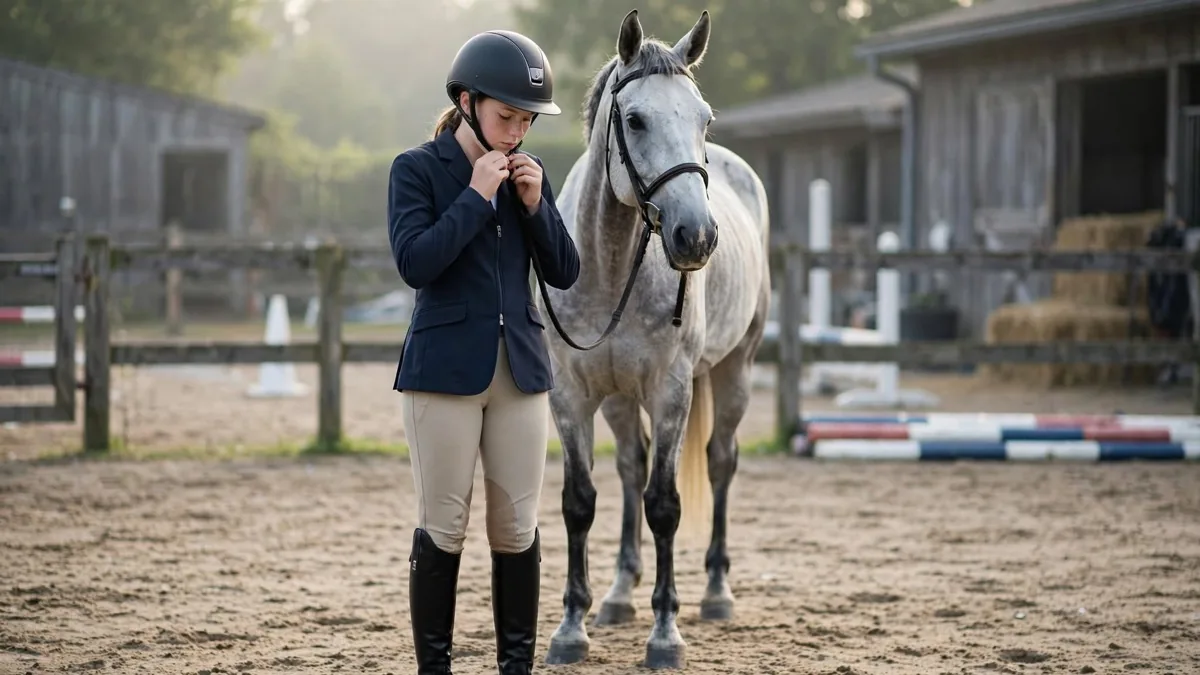
Helmets and body protectors, and only those two. Our own tack buying guide treats protective equipment as the exception to everything else: a riding helmet “should never be bought or sold once its history is unknown”. The British Horse Society reaches the same conclusion from the other direction, advising against a second-hand hat because it is “impossible to see any damage with the naked eye”. The British Equestrian Trade Association extends the warning past purchase: a hat with an unknown history should never be bought or borrowed, which rules out the hand-me-down from a barn friend too.
Body protectors sit in the same category and for the same reason. US Equestrian rule GR801.2 recommends that a vest “pass or surpass the current ASTM standard F1937″ or be certified by the Safety Equipment Institute, and in Eventing an inflatable vest is permitted only when worn over a body protecting vest, not instead of one. Our guidance on buying second hand says the same thing in plainer words: when that history cannot be verified, choose a new, properly fitted helmet instead.
That is the entire new-only list. An older saddle, a well kept bridle, a pair of boots broken in by someone else: all of these can be assessed by looking at them. A helmet cannot.
Does a Riding Helmet Really Expire After Five Years?
Not in the way the internet says. The five year figure is a manufacturer policy, not a test result, and the manufacturers do not agree with each other. Charles Owen’s guides put the maximum useful lifespan at “five years, from the date of first wear, depending on frequency of use”, while its own FAQ gives three to five years. Troxel recommends five years or after any accident. The ASTM equestrian headgear subcommittee notes that manufacturer advice ranges from no recommendation at all to three, five, or eight years.
The claim that the foam rots with age does not survive testing, though the testing was not done on riding hats. MEA Forensic crash tested 675 bicycle helmets, some as old as 26 years, and concluded there is “no justification for two to ten year replacement recommendations based on impact performance”. The bridge to equestrian kit comes from the ASTM subcommittee itself, which notes that equestrian and bicycle helmets “use the same types of liner foam, so these findings are useful for both types of sport”.
So the calendar is the wrong test. The real one is history. The liner is single use, and once it has taken an impact it is no longer as protective “even if it shows no visible damage”, because most dents in the foam are hidden by the shell. Troxel puts it the same way: equestrian helmets are “made for one impact event only”. A pre-loved helmet is unbuyable because you cannot know whether that one event has already happened, not because it has a birthday.
How Do You Read a Safety Label Before You Pay?
Certification is printed on the product, and a pre-loved buyer needs to know where to look and what the marks mean.
| Mark on the label | What it tells you |
|---|---|
| ASTM F1163-23 | The current equestrian helmet specification, last updated 13 February 2023 |
| SEI | An independent laboratory, not the manufacturer, tested the helmet to F1163 |
| No SEI sticker | Grounds to reject the item outright. A helmet with a missing SEI sticker needs to be replaced |
| “Apparel only” insert | An uncertified helmet. These carry a label stating the helmet “will provide no protection to the wearer from a fall or impact” |
| ASTM F1937-04 | Body protector certified for horse sports and horseback riding |
| ASTM F2681-18 | The racing standard, for thoroughbred jockeys and standardbred drivers |
| BETA 2018 colour code | Green on black is Level 1, orange on black Level 2, turquoise on black Level 3 |
The BETA colour is the detail worth checking. Level 3 is the level “considered appropriate for normal horse riding, competitions and for working with horses”. A Level 1 garment carries a printed warning that it is built to professional jockeys’ racing weight limits and “is not intended for use in general horse riding as it provides significantly less protection”. The label and swing ticket colours are what separate them.
It matters at shows, too. USEF rule GR801.1.a makes properly fastened protective headgear compulsory for all persons mounted anywhere on the competition grounds at a licensed competition unless stated otherwise in the relevant division rules, and requires it to meet the testing standards published on the Federation’s website and to carry “the applicable quality testing tag and/or label”. The same rule puts the checking on you, not on the show: GR801.1.c states that the Federation, Show Committee, Competition Management and Licensed Officials are “not responsible for checking headgear worn for such compliance”. Nobody is going to catch a bad helmet for you.
The Horse’s Tack: What a Lesson Rider Never Needs to Own
Everything in this bucket waits until there is a horse to put it on. Saddle, bridle, bit, girth, saddle pads, stirrup leathers and irons, turnout and stable rugs, a grooming kit, buckets and the barn consumables. Second hand is well established here. Our guide to pre-owned horse tack covers what to examine on each piece.
One exception deserves its own paragraph.
Can You Buy a Saddle Pre-Loved Without Buying a Broken Tree?
Yes, with one specific check that no other piece of tack requires. A saddle that has been used on another horse “will have adapted and settled into their shape”, so fit is the question, not condition. The BHS gives a concrete tree test: a sound tree flexes a little, but “an excessive amount of give suggests a broken tree”. Have a qualified saddler inspect a private purchase before you commit, because what “appears to be a cheap saddle can work out to be very expensive if it’s damaged or doesn’t fit”.
What Order Should You Buy Horse Riding Equipment In?
Buy by dependency, not by enthusiasm.
- Boots with a heel. The barn will lend you a helmet for a trial lesson but not usually footwear, and USEF requires boots with a distinguishable heel.
- Your own helmet. The moment riding becomes regular rather than a one off. New, correctly fitted, carrying its certification label.
- Breeches or riding tights. Comfort rather than safety, which is exactly why pre-loved makes sense here.
- Gloves and half chaps. Both cheap second hand, both obvious when worn out.
- A body protector, if your discipline, your trainer or your rulebook asks for it.
- Horse tack, only once there is a horse, and only after a saddle fitting.
Frequently Asked Questions
How much does a horse riding kit cost? Any figure quoted here would be a snapshot. Prices for helmets, boots and breeches vary by retailer, brand, size and season, and the same three items span a wide range between the entry end of a catalogue and the top of it. Price them on the day from a retailer you trust. Two of those three lines can be bought pre-loved, which is where most of the saving sits.
What equipment do you need to ride a horse? A certified helmet, footwear with a heel, and legwear that will not rub. That is the minimum. The riding school supplies the horse and its tack.
What does every horse rider need? A helmet whose history you know. The liner is single use, and once it has taken an impact it is no longer as protective “even if it shows no visible damage”. That is the whole argument for buying this one item new.
What equipment do you need for horse riding? Rider kit (helmet, boots, breeches, gloves, half chaps, body protector) and horse tack (saddle, bridle, bit, girth, pads, stirrups). The three bucket table near the top of this page shows which of those you personally need to own.
What is horse riding equipment called? What goes on the horse is called tack. What goes on the rider is apparel or kit. Protective items such as helmets and body protectors are governed by published standards.
What equipment do I need for my first horse? A fitted saddle, bridle, girth, saddle pads, rugs and a grooming kit, plus the barn consumables. Buy almost all of it pre-loved, and have a qualified saddler check the saddle before money changes hands.
Start With One Good Piece
The honest version of this list is short. Buy the helmet new, because you cannot inspect a history. Buy the body protector new, and check the BETA colour before you do. Then buy everything else pre-loved from a rider who looked after it, which is cheaper, better for the kit already in circulation, and carries no safety cost whatsoever. Browse what riders are listing on Reequestrian, or list the gear your horse has outgrown.


